
Veterans’ Day 2014: The Key to Courage Under Fire

Today we honor our Veterans who have sacrificed their lives for our freedom. We honor those who were willing to do so and were not called to make that ultimate sacrifice. Many have come back home wounded; none are completely unscathed. Here is a reason for patriotism in these days: we nationally celebrate a tiny minority of our populace in that only 6.5% or 19.6 million Americans today are veterans of the United States Armed Forces as of 2013. We love the military; we rightfully see the soldiers, sailors, airmen, Marines, and guardsmen as the best we have to offer. When we think of them we think of our freedom. We are reminded of all that is worth protecting with the precious lives of our greatest national resource. When we see their sacrifice squandered by the wickedness of self-serving parasites dressed as statesmen who are in a position to know and do better, we gnash our teeth. Our passion for the United States of America is matched by our commitment to see the lives of our heroes truly be honored. This is their home, for they are the brave.

Pray for the United States of America

OId Glory in Eastern Connecticut

For Veterans’ Day I want to share the greatest Hero, our Lord, Who in Matthew 26:36-41 provides an example of real courage under fire and then commands His subordinates to prepare to do likewise. The sacrifices of our best and brightest are always a reminder of Calvary. They died so that we could live in a free country. Christ died to secure for us eternal life and make us citizens of Heaven.

Let me set the story up briefly: It was the last night of Jesus’ earthly ministry before going to war and winning our salvation at the Cross. He had conducted final preparations for His disciples prior to being arrested, tried, falsely convicted, tortured, crucified, and most importantly judged for our sins by His righteous and loving Father. The disciples had just been informed concerning Jesus’ impending suffering and departure, but as usual they were slow to catch on. They were worn-out after a long series of ministry events, concluding with the Upper Room Discourse, an all-evening block of instruction in which Jesus prepared them for what would happen after His Resurrection.

Our passage finds Jesus making His final preparations for Himself. As was His custom, no matter how tired He ministry demands might leave Him, Jesus is going to spend some much-needed time alone with His Father. At various points in the ministry of Jesus, we see this habit: Jesus considered prayer to His Father as essential to His earthly ministry, and He protected intentional, devoted time to this, often at the end of His day. If He was devoting time in Matthew 14 to prayer—after that long day of ministry—then we may conclude that this was his non-negotiable priority for his day. There are many ways He could spend His last few hours before His arrest, but Jesus commits that prime time to pouring out His heart to God the Father.

Intimacy and Priority, vv36-38

Matthew 26:36Then Jesus came with them to a place called Gethsemane, and said to His disciples, “Sit here while I go over there and pray.” Here Jesus does what we have seen Him do before. He intentionally separates from His disciples to have some private prayer time. But there is a greater intimacy which eight of the eleven disciples do not have with Christ:

Matthew 26:37And He took with Him Peter and the two sons of Zebedee, and began to be grieved and distressed. 38Then He said to them, “My soul is deeply grieved, to the point of death; remain here and keep watch with Me.” This is the same crew that Jesus specially invited to the Mount of Transfiguration (Matthew 17, Mark 9, Luke 9), another event in which we see the relationship between Jesus and His Father.

Everyone who has gone into combat knows that feeling of impending mortality. When you know you may die, there is a cause for trepidation. Not the whole-sale destruction of our souls through crippling fear, but still the apprehension that “today may be the day.” Jesus did not think He might die; He knew it was certain. Only His blood would pay the price for our sins. Only His separation from His Father as He was crushed for our sins would satisfy the righteousness of God.

Notice Jesus’ instructions in v38: “Remain here and keep watch with Me.” This is a military term, GREGOREO, which means to remain alert, to keep a guarding posture of vigilance. The exact opposite of this term is to go do sleep! Jesus is not asking for a guard detail to protect Him from physical attack but a spiritual concern for the coming storm. This is time for mental and spiritual preparation for what will follow.

Our Model in Prayer, v39

In v39 Jesus prays a beautiful prayer. 39And He went a little beyond them, and fell on His face and prayed, saying, “My Father, if it is possible, let this cup pass from Me; yet not as I will, but as You will.” Let me paraphrase the motivation a bit here: “I do not want to be separated from You, Father. If it were up to Me, and no other concerns were involved, I’d rather maintain our fellowship and rapport. However, since this is Your plan, and since I am Your Son, I gladly defer to Your will.” No one should think that the Father was any more willing for the Son to be crushed than that the Son wanted to be crushed by His Father. This is unthinkable. Rather, we are to see how Jesus treasures His life, which is His loving rapport with God the Father. Of course there is more involved than the Father’s relationship with His Son. There is the issue of you and me and our hopelessness in sin. Perhaps this verse more than any other shows us what was involved in Christ going to the Cross on our behalf. Both God the Father and God the Son wanted us, and the only way they could accomplish our reconciliation was through the Cross—the cup of God’s wrath on sin, His death on our behalf.

We learn to pray in accordance with God’s will in Jesus’ prayers. We are to ask what we want, but we are to submit our preferences to His. Very often we do not know what God is doing with a specific circumstance. We will not until we see Him. Yet, we commit our trials and triumphs to Him and trust Him to bring forth His glory through His will in all things. Like Jesus, we should feel free to express our preferences as we see things, and then we should also include the needed caveat that “not as I will but Thy will be done.”

Accountability and Training—vv40-41

40And He came to the disciples and found them sleeping, and said to Peter, “So, you men could not keep watch with Me for one hour?” Jesus’ rhetorical question immediately calls for self-evaluation by Peter, James, and John. They blew it. They were tired, and they had no real grasp of what was coming. Of course they could have stayed alert and awake, but they did not. Jesus, the ultimate leader, has no problem issuing commands and inspecting for performance. Yet the real power in His leadership style comes from our desire not to disappoint Him. He is the demanding trainer whose very Person draws our best according to our consuming passion: 2Cor5:9Therefore we also have as our ambition, whether at home or absent, to be pleasing to Him. We see this effect in Peter earlier in Mt 26, when he tries to profess his faithfulness despite Jesus’ prophecy to the contrary.

41“Keep watching and praying that you may not enter into temptation; the spirit is willing, but the flesh is weak.” Here is some instruction we desperately need. In our flesh we are weak and need spiritual discernment and energy. The command for today is prayer, and the reason for the command is presented here: “keep watching and praying in order that you may not enter into temptation.” Spiritual alertness as a general orientation, combined with prayer—personal engagement of our Heavenly Father—are by God’s design and revelation a preventative against the power of temptation. These men needed the protection Jesus offered, but they did not avail themselves of it. Indeed, Jesus gave them the instruction before they needed it. He set them up for success so that they would be spiritually strong before the temptation to fear and denial came.

As we celebrate the courage and sacrifice of our great American heroes, let’s remember the preparation our Lord suggested to His disciples on the eve of their great struggle with cowardice: “keep watching and praying so that you may not enter into temptation.”

Go back

Your message has been sent

Warning
Warning
Warning
Warning

Warning.


Posted in American Heritage, Jesus, New Testament Commands | Tagged , , , , , , , , , , | Leave a comment

Mission Priority in Paul’s Prayer: 2 Thessalonians 3:1-2

When you are focused on someone you really love, a project you really believe in, a passion that easily consumes you, you tend to connect everything to that one object of your vision. Sometimes other people may have trouble matching your enthusiasm for your driving passion when you try to share it. They may just smile and nod, hoping the conversation will move on to matters you have in common. As you grow in your faith, you will develop a greater and greater focus on the Lord Jesus Christ. That life-focus will make you want to share Him, and learning to negotiate the conflict between social awkwardness and compassion for the lost is part of growing up.

It can be a challenge at times to remember that not every believer with whom you seek fellowship has developed an evident passion for Christ yet. At the same time none of us has fully “arrived.” Until we are face to face with Him we will be growing “in grace and the knowledge of our Lord and Savior Jesus Christ.” Regardless of where we are in our individual walk with Christ, in the Bible we find that an ever-growing hunger for the things of God is the norm for believers. In 2 Thes 3:1-2, Paul demonstrates his life-consuming passion: making disciples through teaching God’s word. This is the mission of the Lord Jesus Christ (Mt 28:19-20), and Paul’s life was completely committed to the mission.

If I said, “What can I pray for on your behalf?” what would you say? If you had only one summary request to make, what would it be? Paul’s answer should set the trajectory for our lives:

1Finally, brethren, pray for us

that the word of the Lord will spread rapidly and be glorified, just as   it did also with you;

2and that we will be rescued from perverse and evil men; for not all have the* faith.

According to Paul’s scale of values and priorities, a prayer on his behalf is a prayer for his life’s mission—the spread of God’s word. His prayer request is for the advance of the Word: “that the word of the Lord will spread rapidly and be glorified…” yet he says “pray for us.” It is an inescapable conclusion from the apostle’s words that he equated a prayer for his interests as a prayer for God’s mission. He wanted his life to count, and he hung all his ambitions on a successful expansion of God’s priorities.

Sometimes we find significance in what is not said. Paul does not ask for:

  • Prayer for him to have fun, ease, rest, etc.
  • Prayer for him to have health
  • Prayer for God to “expand his boundaries” = wealth
  • Prayer for him to find a wife
  • Prayer for him to have peace, joy, hope, satisfaction, _________.

All these desires are legitimate and the common experience of universal human longing. Yet Paul goes beyond the merely temporal and mundane to embrace eternal significance. The second request, for protection of his person from violence or oppression, is only offered in support of the first request. If Paul will be used by God to spread the word he will need protection. Notice that even the request Paul makes on his own behalf is really in logistical support of the mission. Do your requests for your real and present needs serve the higher goal of God’s mission in the world? If we get first things first our prayers will become more effective.

As a former tanker, I think of the M1 Abrams Main Battle Tank as an illustration of protection in support of the mission. You don’t build seventy tons of armor around an anti-armor gun for just the sheer coolness of it. You don’t match a massive, fuel-guzzling turbine engine to a ridiculously heavy-duty drive-train to show off at monster truck rallies. That tank with its anti-tank gun has a mission: primarily killing other tanks. The armor protects the tank crew from enemy fire so they can accomplish their mission. The engine makes the seventy-ton monster nimble enough to maneuver quickly behind protective terrain, the most important protection in a fire fight. These features, which account for a massive investment of defense dollars in equipment and training of a tank crew are not an end in themselves. These systems enable the crew to accomplish the mission. So it is with Paul’s request, “that we will be rescued from perverse and evil men….”

Anything that serves Paul’s wants or needs as an end in itself is beyond the scope of his highest priority or apparently of his prayer life. The request Paul makes of the Thessalonians begins with his purpose for living. In imitation of Paul we can find purpose in our mission: that the word will spread rapidly and be glorified!

“Delight yourself in the LORD and He will give you the desires of your heart”—PS 37:4


Posted in New Testament Commands, Paul, Prayer | Tagged , , , , , , , | 2 Comments

Unexpected Responsibilities: Exploring God’s Commands to Pray

Sometimes God tells us to do things that we find surprising.   In Genesis 12 He told Abraham to leave everyone and everything he knew, everything that defined him, so that God could redefine him and start the long march to Messiah, “the Seed…to Whom the promise had been made.” I imagine that God’s command to leave family and homeland came as a shock, given Abraham’s limited, human perspective. Yet through God’s eternal vision, this command and Abraham’s response made him the “father of many nations” and more importantly the ancestor of the humanity of our Lord.

I think our limited perspective makes some of God’s commands seem surprising. Maybe this is because we don’t see where our obedience will take us, like with Abraham.  These kinds of commands really call out our faith in the God Who issues them.  Sometimes, though, the surprise is in the nature of the command itself. One feature of the Bible that might be surprising to you is the frequency of commands God issues regarding prayer. The Bible commands prayer quite a bit. It’s like God is saying, “Talk to me” all through the Scriptures.

Over the next few weeks I want to explore some of the Bible’s commands to prprayer manay. Doing so breaks me out of the “cultural Christianity” notion that prayer is merely a desirable option taken up in earnest by the most spiritually-minded among us. Taking my cues from the crowd might leave me with that impression, but then I would be misguided. We have to stop looking around at what everyone is doing and look at what God calls us to do in His Word regarding communication back to Him.

As I make that transition from cultural assimilation to real obedience I find spiritual wealth I never imagined was there. When I invest myself in obedience to the Scripture’s commands to pray, I find that I have a real, vibrant relationship with the God of all peace. I grow with respect to what God has taught me in His Word as I reflect on it and take it back to Him. Prayer is the labor of our first love, the effort we invest in a growing relationship with our God Who has spoken so clearly in the Bible.

But how do we do it?  Some believers are old hands at prayer, while others are daunted by the prospect of addressing Someone they cannot see or hear directly from.  Do we repeat the prayers of others? Do we wait around for that “prayer feeling” to take us into an emotional flood of entreaty so poignant the very earnestness of our tone seems, in our imaginations, to shake the shutters barring our view through the windows of Heaven? Should we seek to emulate the super spiritual pray-ers around us and “sound the part” until we learn how to do it? Pagans notoriously cast about in the seemingly infinite dither of superstition to find the right spell, the right sacrifice, the right rite that will get the attention of sleeping Baal. Should we borrow from their playbook, or is there a better way?

I think the Bible tells us how to do what God wants us to do. Once we have exhausted the biblical record on prayer we will be trained to respond to God’s call to fellowship with Him intelligently, knowing what He wants from us.

God commands prayer through the Apostle Paul in 2 Thessalonians 3:1-2, where Paul demonstrates the priority of Christian mission.  Jesus commands prayer from His disciples on His last night of ministry before the Crucifixion in Matthew 26:41 and Mark 14:38, giving us needed insight into one purpose of prayer.  Paul teaches a priceless formula for peace beyond our understanding in Philippians 4:6-7, where he commands believers to make their requests known to the Lord.  He also repeats the requirement that believers express their gratitude to God all the time in 1 Thessalonians 5:18 and Ephesians 5:20.

I invite you to join me as I explore these wonderful blocks of instruction from our Savior.


Posted in Jesus, New Testament Commands, Paul, Prayer, Theological Overview | Tagged , , , , | Leave a comment

Thanking Our Veterans Part I

Today is Veterans’ Day 2013.  So much of what we enjoy has come to us because of the soldiers, sailors, airmen, and Marines who have given all their tomorrows in our nation’s wars.  The feeling we all have of gratitude for their sacrifice and pride in their accomplishment must these days be tinged with a greater-than-usual sense of regret on their behalf.  As our people abuse their freedoms in either wanton licentiousness or sell them cheaply by becoming dependent on the central government in increasing numbers, Veterans’ Day always accentuates my sense of legitimate national guilt.  Do we not owe them a better showing for what they purchased for us with their blood?

Many people have thanked me today for my service. I have always been a bit dumbstruck when this happens. I know that when someone says “Thank you”  you are supposed to say “you’re welcome.” That is just good manners.  And to be sure I thank veterans for their service all the time.  But as a veteran, I have to say that when I am thanked I immediately think of those we can’t thank in person because they died on the field.  I’m with Hal Moore, who in an interview years ago said that coming home alive from war makes commanders feel guilty because of the men who did not make it.  They are what Veterans’ Day is really about to me.  They actually did something that every vet is willing to do.
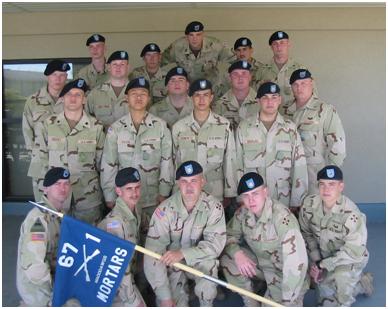
To those who would thank me for the paltry service I rendered as an officer in the U.S  Army, I say that it truly was my pleasure and privilege to contribute to our national defense.  I always want to say thank you back to Americans for giving me that privilege. In  my short five years of active duty service I received more in training and character development than I could hope to pay back in good decision-making and hard work in a forty-year career. Maybe two careers.  Being an Army officer during a vital portion of my life as a young man meant growing up and working in the real world on things that really mattered, and I really needed that if I was going to be a pastor. I truly benefited from learning how to lead with others’ lives on the line, knowing I was called lead in the affairs of spiritual life.

Those men who as my superior officers trained me have my humble gratitude and affection, though I could not always say it back then.  Those men who worked with me as peers were my trainers as well, for the Army is a profession that polices its own ranks.  Those men who worked as my subordinates perhaps trained me the most. That is the way of the junior officer in the military of a free nation.  These all by their commitment to the mission and the men made me successful, if I ever enjoyed any success, and they still motivate me to cultivate my new skills and constantly improve my work today.  I miss them all daily, and I miss the service that brought us together.  They are in my prayers of thanksgiving and intercession.

The men I trained and fought alongside who did not come home, or who came home maimed for life always remind me of what it takes to maintain the fragile gift of American freedom.  For life their families will bear the weight of loss that others can only imagine, though with tears.  I salute these men and their families who understand better than most what we mean when we thank our vets for their service.

I thank God for the United States of America, for Americans who understand what this great experiment in human freedom  is all about, and for our troops, past, present, and future.  What a blessing to be able to say publicly among men that in presence of the Lord Jesus Christ I honor our defenders to His Father.  For now I am free to speak in this Name without threat of censure.  For now.  We have God and our vets to thank for this precious liberty.

Posted in American Heritage | Tagged , , , | Leave a comment

God Tells Us What to Think

We tend to be suspicious by nature when we get the idea that someone is telling us what our opinion should be. Sometimes we adopt the frame of mind of the scientist, where we insist that we will observe only the factual data. “Just the facts, ma’am.” We will see the evidence for ourselves, thank you very much. As seemingly noble and objective as this sounds, the observation of objective facts can and does grow tiresome. Sometimes we feel more like drawing conclusions from the objective facts once they have been established. After all, that’s what the facts are for! Reasoning to conclusions from the data is the “SO WHAT?” factor. Collecting specimens and samples and measurements is all well and good if there’s a point. Otherwise it starts to feel like busy work. The observation of data and reasoning about the data are two different but related thought processes, and thinking people often believe that this is all there is to life. I will observe and/or reason for myself, and that is that.

Not so fast: Enter marketing, rhetoric, political grandstanding, etc. If we are really independent observers and reasoners, then why do businesses spend so much money in advertising? Why does the industry of persuasion work? Why do political slogans capture the imaginations of the electorate? Why can a good rhetorician convince his audience of his position regardless of his topic or the position he takes? It’s simple. We were made with the capacity to believe. When you cannot observe the data for yourself due to lack of necessary expertise or equipment, you have to take someone’s word for it—or not. But the reasoning process gets laborious as well. When you cannot process the data because it is beyond your mental grasp, you have to take someone’s word for it—or not. We are constantly bombarded with “someone’s word for it” regarding pretty much every aspect of life. We even pay for it.

Yes we pay people to tell us what to think. We pay fashion designers big bucks to tell us what looks good. Since the inception of mass radio and television, we have been bombarded with a two-step process of being told what to think. The television program tells you what to think about the topic at hand, and the commercial break tells you what to think about the product being advertised. The free exchange of ideas is full of this kind of persuasive content-sharing. With thinking people, the really successful persuasion happens when the objective data are presented and the conclusions are suggested—all for the receiver to evaluate for himself. But even this approach to rhetoric involves selecting which data to present and emphasize. The element of faith is still present, at least in part, because the receiver has to believe that the presentation is telling the whole story.

All this is to say that so many of us tend to think we are objective and logical when we are actually just taking what someone else says on faith. We all do it. Those who rail against religious faith the most stridently are expressing their faith positions and pleading for others to adopt their same conclusions. That’s a great deal of what pastors do on Sunday morning. So why should we listen to the anti-religious zealot or the pastor? You should not unless he is telling you the truth. On what basis is he making his claim? What exactly is the object of his faith, and is that object worthy of your faith as well?

One intriguing aspect of the Bible and biblical Christian faith is that God actually tells us what to think. The caricature of Christianity or “religion” is that the zealot tells you what to do. In truth, the Bible has plenty of instructions that address our personal behavior. But unlike the behavioral psychology theorists, the Bible paints a picture of man that includes much more than the stimulus-response feedback loop of external behavior. The Bible does not only say “Thou shalt not murder,” but also, “You shall love the Lord Your God with all your heart.” The Bible commands love throughout its pages, for example, and biblical love is a system of thinking that produces behavior and usually an emotional response.

Recently I was asked about a very helpful command in Scripture, and I thought I would share it with you. It is a specific piece of instruction that tells us how we should think about suffering in this life as believers. In this little introductory discussion, I have tried to set the stage for understanding God’s prescription for our thinking in times of correction or intensive training. I am captivated by the Bible’s ability to address the whole human being for his whole life. By God’s design we are observers and reasoners, but we must use faith where our observation and reasoning fall short. As the Word of our Creator, the Bible gives us that sufficient object for our faith, and if we learn to think as God prescribes, we will be pleased with the outcome of our behavior in time and our experience of reward in eternity.

The Command: Hebrews 12:4–5 (NASB95)

4You have not yet resisted to the point of shedding blood in your striving against sin;

5and you have forgotten the exhortation which is addressed to you as sons, “My son, do not regard lightly the discipline of the Lord, Nor faint when you are reproved by Him;

In the next few entries, I will delve into the exegesis of this passage (Hebrews 12:4-11), its theological ramifications in the Christian’s walk, and the Biblical view of child training.

Posted in Apologetics, Bible Study Helps, Christian Suffering, Hermeneutics, New Testament Commands, Old Testament Commands, Proverbs, Theological Overview, Writer of Hebrews | 2 Comments

Rejoice Always

Life is about attitude, and attitude is a matter of perspective. I propose a radical way of life for anyone who has accepted the radical offer of eternal life in Christ. Radical claim: Christians are people who actually believe that they will rise from the dead in glorious refashioned bodies in an “end-times” event called the Resurrection. We believe this because God has promised it, and we have read that promise in the Bible.

Colossians 3:3–4 says, “For you have died and your life is hidden with Christ in God. When Christ, who is our life, is revealed, then you also will be revealed with Him in glory.” This is one reference to the Resurrection, described as the “revelation of Christ.” We find another more explicit statement in Philippians 3:20–21: “For our citizenship is in heaven, from which also we eagerly wait for a Savior, the Lord Jesus Christ; who will transform the body of our humble state into conformity with the body of His glory, by the exertion of the power that He has even to subject all things to Himself.”

The all-powerful Christ will conform our bodies to the likeness of His glorious body. It’s a promise. We need to think on it and claim it. You will never grow spiritually beyond the applicability of this promise. It is our Hope.

This radical belief is foolishness, of course, to those who reject Christianity. Notice that I did not say, “to those who have not heard.” I mean those who reject the offer of eternal life in Christ. Those who have been invited and turned it down. Yes, the world considers this message to be total foolishness.  Advancing something so barbaric and embarrassing as the Cross of Christ as the only path to eternal life is just absurd (1 Cor 1:18). But Christians should build their whole day on this idea. Every day. Every hour. Every minute.

We should regularly think these thoughts: when we die, our soul and spirit will be separated from our body, which is the only part of us that actually dies. Then WE will be in the presence of the Lord Jesus Christ. Face to face. Forever.

2 Corinthians 5:6–8 Therefore, being always of good courage, and knowing that while we are at home in the body we are absent from the Lord— for we walk by faith, not by sight— we are of good courage, I say, and prefer rather to be absent from the body and to be at home with the Lord.

The Command

Philippians 4:4 Rejoice in the Lord always; again I will say, rejoice!

Of course I agree that joy is an emotion derived from a state of mind. I believe that joy is actually the appropriate response of the heart’s emotions when the thinking of part our heart encounters favorable information. Think of the joy of a young child who finds out for the first time that Grandma and Grandpa are on their way over for a visit. The facts have been evaluated and have produced an appropriate emotional response. There are differing levels of joy, just like there are differing levels of sadness or any other emotion. The key point about joy is the thinking of the heart that produces it.

What favorable information can a believer rely on in the throes of great personal crisis and trouble? I suggest that this is a matter of perspective or viewpoint. Better yet, let’s say it’s a matter of focus. When you are overcome with troubles–real, horrific, overwhelming, even excruciating troubles–it is always true that you are not rejoicing. Your focus is on the source of the trouble and not the great solution to ALL your troubles. Troubles will come; You do not have to be overcome by them.  And be certain that you never will have justification for disobeying God because of your troubles.  Ours is a life of suffering in obedience, just like our Savior.

For you to “rejoice in the Lord always” you need favorable facts in the thinking of your heart which will always be true. Permanent good news. Otherwise you have no right to “rejoice always.” Paul’s command is not to fake rejoicing and “put on happy face.”  Pretending to rejoice is not actually doing it.  But he wrote this command from prison while being treated like a criminal. His offense? Living a life of selfless devotion to God’s mission of advancing of the Gospel and the spiritual growth of His vast flock. Loving Christ and His sheep.

The Questions

0. What is Biblical eschatology? Answer:  the biblical doctrine of “last things” or the “end-times.”  Every worldview has an eschatology, including the Christian worldview.

1. What is the day-to-day impact of Biblical eschatology on your Christian walk?

2. What should be the day-to-day impact of Biblical eschatology on your Christian walk?

Passage to Pray

1 Corinthians 15:50–57 Now I say this, brethren, that flesh and blood cannot inherit the kingdom of God; nor does the perishable inherit the imperishable. Behold, I tell you a mystery; we will not all sleep, but we will all be changed, in a moment, in the twinkling of an eye, at the last trumpet; for the trumpet will sound, and the dead will be raised imperishable, and we will be changed. For this perishable must put on the imperishable, and this mortal must put on immortality. But when this perishable will have put on the imperishable, and this mortal will have put on immortality, then will come about the saying that is written, “Death is swallowed up in victory. “O death, where is your victory? O death, where is your sting?” The sting of death is sin, and the power of sin is the law; but thanks be to God, who gives us the victory through our Lord Jesus Christ.

Posted in Eschatology, New Testament Commands, Paul, Theological Overview | Tagged , , , | 1 Comment

Praying the Scriptures

In the months since writing for “Attention to Orders,” an experiment in daily devotion writing that was well-received and short-lived due to the realities of life and ministry, I have always wanted to pick it back up on a weekly basis.

In this modest beginning I propose to clarify what I mean by “Passage to Pray” at the end of each entry. Praying the Scriptures was introduced to me by two men in my theological training who team-taught the same course at Dallas Theological Seminary. The first was Dr. Howard Hendricks, beloved far and wide for more than fifty years as a Bible expositor; revered by thousands of pastors and seminary graduates for introducing them to methodical Bible study. In his book, Living By the Book, which he co-authored with his son, “Prof” teaches the reader to read the Bible “prayerfully.” It was his teaching partner in the team-taught “BE101: Bible Study Methods and Hermeneutics” who demonstrated this remarkable and obvious approach to enriching your prayerful relationship with God. Prof Hendricks’ teaching partner was Dr. Mark Bailey, currently the president of Dallas Theological Seminary and also a distinguished professor of Bible Exposition.

Dr. Bailey took the class to a Psalm, perhaps like Psalm 8 in a good English Bible (word-for-word translation) like the KJV, NKJV, NASB, etc, and he just prayed through it. It was remarkable how simple and–as I stated before–obvious this was as I prayed along with him, listening to his praise of our God using the Word of God. Try reading the following passage, observing the pronouns:

Psalm 8:1–2 (NASB95)

    1    O Lord, our Lord,

How majestic is Your name in all the earth,

Who have displayed Your splendor above the heavens!

    2    From the mouth of infants and nursing babes You have established strength

Because of Your adversaries,

To make the enemy and the revengeful cease.

To read these words aloud is to pray to the God of David with the words of David. Actually, most of the Psalms are prayers, if you define prayer as personal communication from man back to God. This is the part this is so obvious, just in terms of literary genre. The Scriptures are designed specifically to enable us to glorify God in prayer.

Praising God according to His Word, describing Him as He truly is in a loving and exalting way is a skill that takes practice and often seems impossible to do at first. Think of the most skilled musicians or craftsmen. Genius is almost always innovation that builds upon existing techniques. Yes, there are the game-changing geniuses that define entirely new structures, like Isaac Newton or J. S. Bach. But the Mozarts and Beethovens come along only by building on their forebears’ genius. To pray well, I suggest that the best starting point is to copy from the pros in the Psalms.

My friend and one of several pastoral mentors, Charles Clough, mentioned praying the Scriptures back to the Father the other day in his latest Framework course for Chafer Seminary. I was reminded of this very helpful technique that few seem to know about, and it spurred me on to re-start “Attention to Orders.” Praying this way really unlocks the Psalms and parts of the Prophets so that the Spirit can use their content to saturate our souls with Truth.  Focusing on these passages and allowing them to direct our thinking causes our communication to follow suit.  Skillful prayer is really a matter of imitation.

May you be encouraged and proficient in worshiping our Creator, Savior, and Judge as you address Him with His thinking in His Spirit through His Son.

Posted in Uncategorized | 1 Comment

23 November 2010: Give Thanks

Why are we attracted to people who are genuinely grateful? Why are ingrates so repellent? In short, it is because we recognize our purpose and design when we see it shine in the lives and attitudes of other people. Most humans have no idea why these virtues instinctively resonate with us, but the Bible has the unequivocal answer.  This week we celebrate Thanksgiving, and the holiday itself is another reason to thank God for the United States of America. Why should we be thankful for the day on which “We the People” give thanks?

Historically, we are a people who place a high premium on real virtue, which is nothing less than God’s character reflected in man’s thinking. Thanksgiving would never have caught on if we had called it “Feast and Football Day.” While humans tend to look for any excuse to throw a party or indulge in all sorts of gratifying pursuits, we still sense fragments of that national gratitude which produced our day of Thanksgiving, an American original.

Thankfully, this American cultural expression stands as a stark, historical reminder to our founding Virtue, the “fear of the Lord.” Sure, many men and women today would strangle our national, unifying Virtue in the service of its antithesis. They will doubtless continue to do so, but think on this: the scoffer will have to scoff while acknowledging that we as a nation take off work and travel to be with family on November 25th this year.

The Command

In everything give thanks; for this is God’s will for you in Christ Jesus. ” (1 Thessalonians 5:18, NAS)

Context is always important, especially for commands that assign responsibility to those who would serve the Lord. Fearing the Lord means taking care to behave in a way that pleases Him. Of course. However this command is clear and stands alone as a one-verse requirement for every believer in the Lord Jesus Christ. The broad context: this is Paul’s second earliest epistle in the Bible to a spiritually young audience of believers in the Roman province of Macedonia. We find the fundamentals of the Christian Faith in First Thessalonians, and this is a great example of the basic attitude and action of an advancing believer.

The command itself needs some close attention. In Greek it reads like this:

ἐν παντὶ εὐχαριστεῖτε· τοῦτο γὰρ θέλημα θεοῦ ἐν χριστῷ Ἰησοῦ εἰς ὑμᾶς.

“In everything be giving thanks, for this is the will of God in Christ Jesus for you.”

In Everything

Paul makes a sweeping summary statement in this closing section of short, summary commands. The phrase “in everything” bears some thoughtful reflection. Here’s a valuable test on whether we’re really humbling ourselves before the Living God. Is it ALL about Him? Can you thank Him for everything? This command gets at what I and others observe to be the counter-intuitive nature of the Faith. When we hurt we so often think something other than “Thank God for the opportunity to glorify Him despite the suffering.”

Our typical response to suffering is “incurvature.” When pressure mounts from without, the response of the sin nature within is to focus on ourselves and what we want or prefer. Too much attention to self usually draws us into irrationality and thoughts about what we “deserve,” with never the slightest thought to what we actually do deserve as sinners before our Righteous Creator.

After some reflection, I think believers can agree that the big picture is the solution to our suffering-inflamed myopia. Bible Doctrine, the teaching of the Lord Jesus, the Word of God gives us the perspective that makes rejoicing in all things an absolute necessity. When you “consider Him who has endured such hostility by sinners against Himself, so that you will not grow weary and lose heart,” it is easy to give thanks even when you hurt. It takes some direct revelation from God, which we find in the Bible, mixed with some faith from us–faith both in God who said the words and then in the very words He said. So yes it hurts. But no, it is nothing compared to the suffering of the Cross. So the setback disappoints and somehow frustrates our plans; there is no disappointment or frustration of God’s perfect, eternal plan for us in Christ Jesus. By adopting an eternal perspective about ourselves and our relationship with God, we not only can weather the storm, we can give thanks for it.

There is even more here about our motivation to be thankful for suffering. We can give thanks for suffering particularly because it becomes a source of blessing and communion with Jesus Christ. He tells us to leap for joy over suffering for the sake of righteousness because it means great reward in Heaven (Mt 5:11-12). Jesus told the first leaders of the Church (before there was the Church) that worthiness of Him meant a willingness to suffer in His pattern (Mt 10:38, Lk 9:23, 14:27).

For this is the Will of God

In our command we have a great blessing that few seem to appreciate: clarity on what God expects. The straining and second-guessing are over in the quest to find God’s Will. He wants you to be thankful in everything. The crowning motivation of the Christian life is what Paul provides here: God wants it, so we should want it. The scoffer revolts precisely at this point. We were made for a personal relationship with our Creator, and the relationship was never about peers on equal footing. God is God, man is His creature. There is an infinite gap between us, and we are in the infinitely subordinate position. A little child’s loving father wants him to think rightly, to correspond to the truth, to be careful around traffic and have a healthy respect for things that are dangerous. So it is with God’s will for us.  Because He loves us He tells us what He wants us to do. Give thanks, for the search for the will of God is over.

In Christ Jesus

This phrase should always shock us back into recognition of our identity before God. We are “in Christ Jesus,” the highest possible calling. With our identity in Christ comes the highest privileges, the greatest hopes, and consequently the weightiest expectations. Because of Christ we can say, “I consider that the sufferings of this present time are not worthy to be compared with the glory which is to be revealed to us.”

Such was the attitude of the people of the United States in the generations prior to and for awhile after the ratification of our Constitution.

Three Thoughts

1. We are commanded to constant giving of thanks to God for all things.

2. This is God’s will for us; to reject the command is to miss the blessing for which we were designed.

3. The best motivation we will ever know is personal relationship with God. If He wants it, we want it.

Passage to Pray

2 Samuel 22

Memory Verse

“In everything give thanks; for this is God’s will for you in Christ Jesus. ” (1 Thessalonians 5:18, NAS)

Posted in Apologetics, New Testament Commands, Paul | Leave a comment

16 November 2010: Broad Perspective on God, Commands, and the Bible

Like it or not we read the Bible through the grid of our preconceptions. As we submit them to the Text, they gradually, bit-by-bit conform to it, to God and His preferences and prerogatives. So the usefulness of pastors and teachers, vocational theologians, is that they should have their preconceptions better conformed to the Bible than those whom they are shepherding. Or better, as a friend would say, we should at least strive for “parity.” Being Christian is not about conforming to the world. Quite the opposite, we are to be conformed to the Word, to the very character of Christ. The peril of our times in Christendom is a world-driven church. The simple antidote to the poison is Word-driven believers.

The Age of Grace Still Has Law

Reading the Text in a straightforward way lends a clear observation that the Law of Moses is not the Law of the Church, God’s out-called collection of human beings in this age called “the Bride of Christ (Eph 5:25-27, 2 Cor 11:2)” and the “Body of Christ (Eph 4:12).” This is an application of Paul’s argument in Galatians 3-4. Yet to say that Christ fulfilled the death-dealing Law of Moses and freed those under it from enslavement to sin is not to say that Christians are without God’s Law.

Nine of the Ten Commandments are restated in the New Testament as binding on us. It still contradicts God’s character to have other gods before Him, or to murder, or to steal, or to covet the property or spouse of another. The ritual and shadow-imagery aspects of the Law have been fulfilled, along with the final and complete sacrifice for sin. So wear polyester if you like, but don’t think for a minute that sin is irrelevant to your post-justification experience!

We should recognize a subtle misunderstanding in the hearts of many concerning the nature of sanctification this side of the Cross. Grace does not mean the absence of law; it means the Divine capacity to comply with the very character of God. We are, for certain, in the “Age of Grace” as Scofield and Chafer put it, but no one seriously thinks that there was no grace in the “Age of Law.” The Law of Moses was God’s gracious provision for Israel and the watching world. Think of Elijah on Mt. Carmel in 1 Kings 18. He knew exactly what his God wanted. In strong relief, the priests of Baal had no clue what would stir their imaginary deity to reveal himself, and so to anyone who reads the account they look forevermore like rioting idiots around their sacrifice, shouting themselves hoarse, cutting themselves, and so on. (1)

People of my theological bent are often mis-characterized as believing in a legalistic way of justification during the tenure of the Mosaic Law and a grace way of justification now that Christ has come. No true Bible-student who can read English with moderate comprehension would think this way, including the great and godly men of my dispensational heritage. This system is an effort to submit to the Bible, nothing more or less. Of course salvation is, has been, will always be “by grace through faith.” So we should be clear about the unchanging expression of God’s loving character in this word grace. Grace has and will always be with us. In this age it is more focal than in the previous one.

We in this age need to remember that God’s grace must correspond perfectly to His righteous character. We should, therefore, not be surprised to find an extension of that righteousness in God’s instructions for us in the New Testament. Many of the commands for believers indwelt by the Holy Spirit are of a different nature than those commanded at Mt. Sinai. Of course you are not to commit murder! Of course idolatry is out-of-bounds of the Bible’s prescriptive spiritual life for Church saints. But the power in which we fulfill our responsibilities is completely different in this age from what God made available to saints before the coming of the Messiah.

What Makes it the “Age of Grace”

The main distinction between the Age of Law and the Age of Grace is the empowering presence of the Holy Spirit in all the saints of this age. This means new power–by the grace of God–to do all that we are called to do (Eph 2:10, Phil 2:13). Galatians 5:16 is a very truly a command in the imperative mood to “walk by the Spirit.” Recognizing this directive as a command which we are responsible to God to obey is not legalism; these are our marching orders. Literally. In the same context, Paul lists the fruit that the Spirit of God produces in us when we walk by Him, vv22-23. Verse 23b highlights the difference between Sinai and Pentecost: “Against such things (the fruit of the Spirit) there is no Law.”

To be sure we have prohibitions that are binding on us now, but their observance is the basement of the believer’s experience of the walk that is “by faith, not by sight.” We’re supposed to live in the president’s suite on the top floor through the Holy Spirit.

Jesus very clearly taught that the Law of Moses and the Prophets who called Israel back to it were not fomenting legalism. God never approves of hypocrisy and pseudo-righteousness. Man saying evil is good and good is evil is always under condemnation from God; for doing so denies the truth. Sinful man always takes God’s instructions and distorts them into a self-worship of idolatrous pseudo-righteousness. This happened to the Law under the Pharisees, and it has happened to Jesus’ correction of that misinterpretation, the Sermon on the Mount, by liberal theologians. “Transgressions,” the product of man’s sinful nature in the face of a righteous standard, were exactly what the Law was designed to demonstrate, according to Galatians 3:19. These would include the subtle source-sins of hypocrisy-inducing arrogance and self-righteousness.

Four Thoughts

1. To the extent that we think God ever advocated or even condoned legalism in the lives of His people, we need to be corrected and conformed to what the Scriptures actually teach. The Law of Sinai was not legalistic.

2. God is always gracious when it comes to the salvation of sinners. There is no other way man can receive eternal life than the all-sufficient grace of God. This is how it has always been since man needed to be justified after the Fall of Genesis 3.

3. All the commands binding on Church age believers directly correspond in some way to the Righteous character of Christ. Sanctification, the Christian’s spiritual life after initial justifying faith in Christ, is a process of growing in our character and actions to conform to that righteousness which is our birthright by God’s gracious imputation. Our salvation is just like Abraham’s, except we look back to the saving Work of Messiah. But our sanctification must be radically different from his, for we are the Temple of the Holy Spirit.

4. An unchanging God with a multi-phased plan that will perfectly achieve His purposes through and despite imperfect persons is exactly the Biblical presentation. Welcome to real dispensationalism or Biblical-systematic theology.

Passage to Pray

Galatians 5

Memory Verse

But I say, walk by the Spirit, and you will not carry out the desire of the flesh. ” (Galatians 5:16, NAS)

(1) F0r this insight, my thanks go to Dr. Brian Webster, professor of Old Testament at Dallas Theological Seminary and author of The Cambridge Introduction to Biblical Hebrew, my go-to first-year Hebrew text.

Posted in New Testament Commands, Paul, Theological Overview | Leave a comment

11-14 November 2010: Fear, Remembrance, and Fighting

Happy Veterans day to all Veterans, all Americans, and all human beings who have enjoyed freedom, safety, and stability because of the endeavors of the U.S. Armed Forces. The world’s punching bag, everyone’s favorite country to bash, has for more than sixty five years stood resolute as the single force for stability in the West, and those who have served enjoy the honor of being the “tip of the spear” of the good guys. Well done, you who are the last bastion of common sense in America’s institutions.

While the various Euro-socialist “democracies” have spent themselves into ruin by redistributing wealth from the hard-working and prudent producers to those who refuse to be either hard-working or prudent, Americans have invested in defense. Someday our resolve may crumble, and the forces of tyranny may again claim the territories of our weakened allies without our ability to respond. Such is our present course. Some in our government advocate national weakness, and indeed they are fronting weakness to the world because they have a flawed view of sinful mankind and human wickedness.

So be it; this and the next few generations will learn from experience the lessons that history should have taught them. In honor of our Veterans, let’s explore the history of God’s works in Israel and discover the Bible’s view of defense.

The Commands

When I saw their fear, I rose and spoke to the nobles, the officials and the rest of the people: “Do not be afraid of them; remember the Lord who is great and awesome, and fight for your brothers, your sons, your daughters, your wives and your houses.” (Nehemiah 4:14, NAS)

Context

The historical event in view is the rebuilding of the wall of Jerusalem after the return of Israel from the seventy year Babylonian captivity. They had sanction from the human government over them, the Persians under Artaxerxes I (Neh 2:1-10), and a military threat from the nations surrounding them, the Arabs, the Ammonites, and the Ashdodites (Neh 4:7).

In 4:1-6, the neighboring peoples despise and ridicule their efforts at rebuilding the wall. To this Nehemiah responds with prayer to God (vv4-5), because the ridicule has “demoralized the builders.” “Sticks and stones may break our bones…” but the words of Sanballat and Tobiah almost stopped the builders from their work with sticks and stones. Never underestimate the power of thoughts and ideas either to motivate or to stop forward progress!

In 4:7-8, the neighboring peoples make a conspiracy to stop the work and fight, LACHAM (לחם) against them. This conspiracy, too, was met with prayer in v9, but not just prayer. They prayed and set up a guard “day and night.” Those words will haunt the veterans out there who know what “24-hour ops” are like. The vigilance required in military endeavor is endless. Yes, there is time to sleep generally, but never as much as you would like. But the real headache is that you’re never “done” until the operation is over. Such is the life of our deployed service men and women; it is exciting and challenging but very suspenseful and draining. We should always remember to pray for their encouragement and energy.

In 4:10-13, there is the final setting for the famous verse 14. Verse 10 gives the “Friendly Situation” in the form of a morale report that the men of Judah claim they cannot finish the work. Verse 11 is the “Enemy Situation,” and verse 12 is the “Intelligence Report” regarding the enemy. The report is that the neighboring peoples are planning to come in and kill the builders by using the building materials as cover. Commander Nehemiah responds to the enemy situation and friendly intelligence by stationing every available person in a defensive posture.

May we never again face, as in the Colonial days, the War for Independence, and the Civil War, an army on our own soil that requires everyone to shoulder a weapon in defense of our very lives. Such is the pressure on Israel today, and their response is similar to Nehemiah’s:

then I stationed men in the lowest parts of the space behind the wall, the exposed places, and I stationed the people in families with their swords, spears and bows. (Nehemiah 4:13, NAS)

Families refers to extended families, or “clans.” Relatives. Think of Thanksgiving dinner. All the men watching football after the turkey and dressing would form your squad at your portion of the wall. When soldiers fight today, their “battle buddy” is the closest person in the world to them at that moment. The combat environment forges bonds that rival family ties in many cases. When the person next to them is killed, it is on par with a violent death of a brother or sister. Imagine the horrific nightmare of having to go to the town “wall” with your uncles, brothers, father, cousins and face an enemy trying to kill them. Such arrangements would account for a vigorous defensive force indeed. After weeks and months of training, working, playing–living–with their fellow soldiers, our military personnel form a family-like bond with their companions. Some give the ultimate sacrifice of their lives. Their fellows lose something of themselves too every time it happens. Just like in your family.

The Three Commands

1. Do Not Be Afraid. Preliminary to any martial endeavor is the freedom from fear that enables our minds to think clearly and our hands to act decisively. Fear accompanies any dangerous situation, and really there are different kinds of fear. What is being prohibited here is the irreverent lack of trust in God that destroys a person’s soul and inhibits thought and action. If you have an appropriate awe for the Creator, you will not have an inappropriate fear of circumstances, even mortal danger.

2. Remember the LORD. It is one thing to prohibit fear, and just saying “don’t be afraid” rings empty if you fail to offer the person in danger the alternative. Fearlessness apart from reliance on God is effective in the heat of battle, but it lacks divine empowerment and is therefore the opposite of worship. In other words, what you do is not as important as why or how. Nehemiah’s second command is that they turn from fear of the enemy to trust in God. This only takes place in the person’s thinking. Battles are won and lost in the minds of the combatants as much as on the fields of strife.

These first two commands are the essential groundwork for both the success of the mission AND the wellbeing of the soldiers. Today’s commanders fight to maintain a priority for both mission and soldiers. This balance is their constant heartache because a successful mission so often requires the sacrifice of good men. Commander Nehemiah demonstrates this concern and hereby offers the best inducement there could ever be for real courage: Remember the Lord.

3. Fight. Let us not forget that the mission is the survival of their nation. Sacrificing self for the lives of others is the ultimate love, according to Jesus (John 15:13). Americans for 234 years have agreed that our Soldiers, Sailors, Airmen, Marines, Guardsmen, Police, and Firefighters are worthy of highest honor because they are willing to sacrifice themselves for us.

For what does Nehemiah command Israel to fight? “…Fight for your brothers, your sons, your daughters, your wives and your houses.” This is always the true and legitimate motivation for warfare. We call our military wing of government the Department of Defense for a good reason. Pacifists tend to forget that “war is hell,” because they have not experienced war here at home. The idealism of “war is not the answer” makes no sense in the face of an enemy tank turning down your street and training its coaxial machine gun on your forehead or your child’s forehead. At that point, your lawyer will not help you with the conflict. In such an instant you cannot “buy the world a Coke.” You either need another tank or an anti-tank infantry weapon if you hope to protect yourself or, more importantly, your family. Attack helicopters work nicely too. After all, let’s think in terms of the ideal.
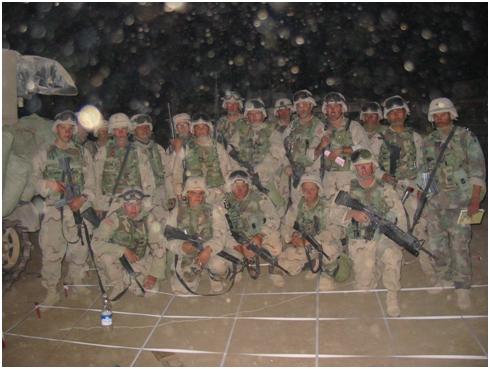
Military operations that would successfully protect the home-front take massive preparations. We almost learned the hard way in World War II that a military force has to be ready before you need it. In those days we were able to mobilize in time to make up for past neglect of our defenses because the U.S. was a manufacturing dynamo with a reserve work force waiting in the wings. This is not the case today.

Today we receive manufactured goods from other nations. How shortsighted of us a mere 65 years after the conclusion of that war which took the lives of between 50 and 70 million human beings. War most often means nation against nation, and the Bible says war is here to stay until Jesus removes it (Isaiah 2:4). Such is the effect of sin on the human race, to our dismay. Nations are composed of families, and family members join together with others from the nation to defeat their common national enemies. That is what we find in Nehemiah 4.

In the long term, the most destructive single thought to our national security is that we are moving past the usefulness of nation-states. Entrenched Utopian internationalism almost guarantees that there will be no future for the United States, since we are the leader of this unbiblical and nonsensical notion. In trying to pretend that we are not what we are–a sovereign nation-state, decision makers will drain our resources and invite others to help, all in the name of charity (a decidedly Biblical notion in its proper context) or “re distributive change” (a decidedly unbiblical notion). Nehemiah was the commander of the unified national force, composed of families fighting for each other. Such a force has the combined power to repel national aggressors. The most important function of a centralized government, defense, loses its efficacy when the central government disregards its reason for existence in the God-given institution of nation.

Passage to Pray

Psalm 33

Note: Verse 12 refers to believing, national Israel, but one can surely apply it to any nation whose people respond to God in faith through Jesus Christ.

Memory Verse: Nehemiah 4:14

When I saw their fear, I rose and spoke to the nobles, the officials and the rest of the people:

“Do not be afraid of them; remember the Lord who is great and awesome, and fight for your brothers, your sons, your daughters, your wives and your houses.”
(Nehemiah 4:14, NAS)

Posted in Historical Books, Nehemiah, Old Testament Commands | 3 Comments