
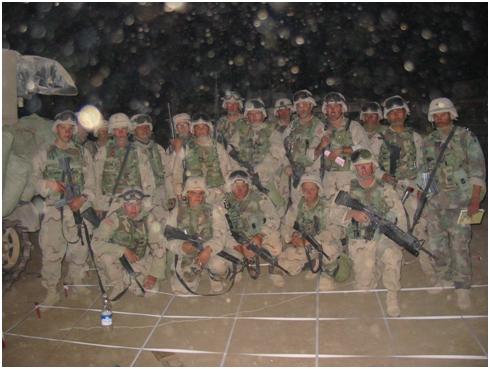
Happy Veterans day to all Veterans, all Americans, and all human beings who have enjoyed freedom, safety, and stability because of the endeavors of the U.S. Armed Forces. 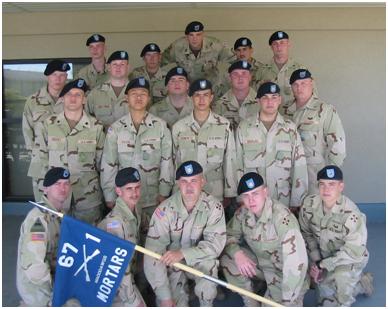 The world’s punching bag, everyone’s favorite country to bash, has for more than sixty five years stood resolute as the single force for stability in the West, and those who have served enjoy the honor of being the “tip of the spear” of the good guys. Well done, you who are the last bastion of common sense in America’s institutions.
While the various Euro-socialist “democracies” have spent themselves into ruin by redistributing wealth from the hard-working and prudent producers to those who refuse to be either hard-working or prudent, Americans have invested in defense. Someday our resolve may crumble, and the forces of tyranny may again claim the territories of our weakened allies without our ability to respond. Such is our present course. Some in our government advocate national weakness, and indeed they are fronting weakness to the world because they have a flawed view of sinful mankind and human wickedness.
So be it; this and the next few generations will learn from experience the lessons that history should have taught them. In honor of our Veterans, let’s explore the history of God’s works in Israel and discover the Bible’s view of defense.
The Commands
When I saw their fear, I rose and spoke to the nobles, the officials and the rest of the people: “Do not be afraid of them; remember the Lord who is great and awesome, and fight for your brothers, your sons, your daughters, your wives and your houses.” (Nehemiah 4:14, NAS)
Context
The historical event in view is the rebuilding of the wall of Jerusalem after the return of Israel from the seventy year Babylonian captivity. They had sanction from the human government over them, the Persians under Artaxerxes I (Neh 2:1-10), and a military threat from the nations surrounding them, the Arabs, the Ammonites, and the Ashdodites (Neh 4:7).
In 4:1-6, the neighboring peoples despise and ridicule their efforts at rebuilding the wall. To this Nehemiah responds with prayer to God (vv4-5), because the ridicule has “demoralized the builders.” “Sticks and stones may break our bones…” but the words of Sanballat and Tobiah almost stopped the builders from their work with sticks and stones. Never underestimate the power of thoughts and ideas either to motivate or to stop forward progress!
In 4:7-8, the neighboring peoples make a conspiracy to stop the work and fight, LACHAM (לחם) against them. This conspiracy, too, was met with prayer in v9, but not just prayer. They prayed and set up a guard “day and night.” Those words will haunt the veterans out there who know what “24-hour ops” are like. The vigilance required in military endeavor is endless. Yes, there is time to sleep generally, but never as much as you would like. But the real headache is that you’re never “done” until the operation is over. Such is the life of our deployed service men and women; it is exciting and challenging but very suspenseful and draining. We should always remember to pray for their encouragement and energy.
In 4:10-13, there is the final setting for the famous verse 14. Verse 10 gives the “Friendly Situation” in the form of a morale report that the men of Judah claim they cannot finish the work. Verse 11 is the “Enemy Situation,” and verse 12 is the “Intelligence Report” regarding the enemy. The report is that the neighboring peoples are planning to come in and kill the builders by using the building materials as cover. Commander Nehemiah responds to the enemy situation and friendly intelligence by stationing every available person in a defensive posture.
May we never again face, as in the Colonial days, the War for Independence, and the Civil War, an army on our own soil that requires everyone to shoulder a weapon in defense of our very lives. Such is the pressure on Israel today, and their response is similar to Nehemiah’s:
then I stationed men in the lowest parts of the space behind the wall, the exposed places, and I stationed the people in families with their swords, spears and bows. (Nehemiah 4:13, NAS)
Families refers to extended families, or “clans.” Relatives. Think of Thanksgiving dinner. All the men watching football after the turkey and dressing would form your squad at your portion of the wall. When soldiers fight today, their “battle buddy” is the closest person in the world to them at that moment. The combat  environment forges bonds that rival family ties in many cases. When the person next to them is killed, it is on par with a violent death of a brother or sister. Imagine the horrific nightmare of having to go to the town “wall” with your uncles, brothers, father, cousins and face an enemy trying to kill them. Such arrangements would account for a vigorous defensive force indeed. After weeks and months of training, working, playing–living–with their fellow soldiers, our military personnel form a family-like bond with their companions. Some give the ultimate sacrifice of their lives. Their fellows lose something of themselves too every time it happens. Just like in your family.
The Three Commands
1. Do Not Be Afraid. Preliminary to any martial endeavor is the freedom from fear that enables our minds to think clearly and our hands to act decisively. Fear accompanies any dangerous situation, and really there are different kinds of fear. What is being prohibited here is the irreverent lack of trust in God that destroys a person’s soul and inhibits thought and action. If you have an appropriate awe for the Creator, you will not have an inappropriate fear of circumstances, even mortal danger.
2. Remember the LORD. It is one thing to prohibit fear, and just saying “don’t be afraid” rings empty if you fail to offer the person in danger the alternative. Fearlessness apart from reliance on God is effective in the heat of battle, but it lacks divine empowerment and is therefore the opposite of worship. In other words, what you do is not as important as why or how. Nehemiah’s second command is that they turn from fear of the enemy to trust in God. This only takes place in the person’s thinking. Battles are won and lost in the minds of the combatants as much as on the fields of strife.
These first two commands are the essential groundwork for both the success of the mission AND the wellbeing of the soldiers. Today’s commanders fight to maintain a priority for both mission and soldiers. This balance is their constant heartache because a successful mission so often requires the sacrifice of good men. Commander Nehemiah demonstrates this concern and hereby offers the best inducement there could ever be for real courage: Remember the Lord.
3. Fight. Let us not forget that the mission is the survival of their nation. Sacrificing self for the lives of others is the ultimate love, according to Jesus (John 15:13). Americans for 234 years have agreed that our Soldiers, Sailors, Airmen, Marines, Guardsmen, Police, and Firefighters are worthy of highest honor because they are willing to sacrifice themselves for us.
For what does Nehemiah command Israel to fight? “…Fight for your brothers, your sons, your daughters, your wives and your houses.” This is always the true and legitimate motivation for warfare. We call our military wing of government the Department of Defense for a good reason. Pacifists tend to forget that “war is hell,” because they have not experienced war here at home. The idealism of “war is not the answer” makes no sense in the face of an enemy tank turning down your street and training its coaxial machine gun on your forehead or your child’s forehead. 
 At that point, your lawyer will not help you with the conflict. In such an instant you cannot “buy the world a Coke.” You either need another tank or an anti-tank infantry weapon if you hope to protect yourself or, more importantly, your family. Attack helicopters work nicely too. After all, let’s think in terms of the ideal.
Military operations that would successfully protect the home-front take massive preparations. We almost learned the hard way in World War II that a military force has to be ready before you need it. In those days we were able to mobilize in time to make up for past neglect of our defenses because the U.S. was a manufacturing dynamo with a reserve work force waiting in the wings. This is not the case today.
Today we receive manufactured goods from other nations. How shortsighted of us a mere 65 years after the conclusion of that war which took the lives of between 50 and 70 million human beings. War most often means nation against nation, and the Bible says war is here to stay until Jesus removes it (Isaiah 2:4). Such is the effect of sin on the human race, to our dismay. Nations are composed of families, and family members join together with others from the nation to defeat their common national enemies. That is what we find in Nehemiah 4.
In the long term, the most destructive single thought to our national security is that we are moving past the usefulness of nation-states. Entrenched Utopian internationalism almost guarantees that there will be no future for the United States, since we are the leader of this unbiblical and nonsensical notion. In trying to pretend that we are not what we are–a sovereign nation-state, decision makers will drain our resources and invite others to help, all in the name of charity (a decidedly Biblical notion in its proper context) or “re distributive change” (a decidedly unbiblical notion). Nehemiah was the commander of the unified national force, composed of families fighting for each other. Such a force has the combined power to repel national aggressors. The most important function of a centralized government, defense, loses its efficacy when the central government disregards its reason for existence in the God-given institution of nation.
Passage to Pray
Psalm 33
Note: Verse 12 refers to believing, national Israel, but one can surely apply it to any nation whose people respond to God in faith through Jesus Christ.
Memory Verse: Nehemiah 4:14
When I saw their fear, I rose and spoke to the nobles, the officials and the rest of the people:
“Do not be afraid of them; remember the Lord who is great and awesome, and fight for your brothers, your sons, your daughters, your wives and your houses.”
(Nehemiah 4:14, NAS)

 But what about the command to rejoice? This is not the same as plodding along through life and meeting a happy circumstance that inspires joy. Sure, there are surprises along the way that “make our day,” but the Christian life is not designed by God to be a mere series of reactions to the circumstances we encounter. The Christian life is a life of deliberate
 fe, for wisdom, for embracing our Father. And there we find better answers than our questions, answers that really satisfy.
 This event is a singular turning point in the Genesis narrative, where God restricts the Plan of human redemption in the Seed of the Woman (Gen 3:15) to one family out of all the families of the earth. God started with one man, Abram, and brought about the miracle of Calvary, the Resurrection, and eventually the Kingdom of David’s Greater Son. The relativists and inclusivists will hate the implication of a restricted revelation from Sovereign God, Whose view of truth is the view.
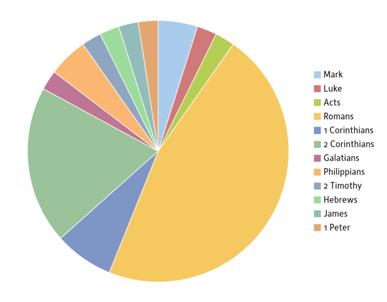 The command is LOGIZOMAI, λογιζομαι, a common word in the NT (41 occurrences) that always addresses a person’s thinking. Paul is particularly fond of this word (33 instances are his), which generally means consider or reckon. He uses it nineteen times in Romans, which is surely a book of Reckoning. Here is an interesting question: Is this word so common for Paul because he was given to reflection and thought, or is reflection and thought central to Paul’s objective subject matter? The liberal theologian will tend to favor the former, while the evangelical will recognize the latter. One results in worship; the other is manifest arrogance.


 to us yourself and we will listen; but let not God speak to us, or we will die.” Moses said to the people, “Do not be afraid; for God has come in order to test you, and in order that the fear of Him may remain with you, so that you may not sin.” (Exodus 20:18–20, NAS)