We want to know that everything is under control. More importantly, that everything is going to be OK. What if God, Who knows that everything is going to be OK, told you so (Romans 8:28)? At that point you have two options: you can believe the message or reject it. Either way, you are going to find out eventually, and your response will decide on which side of history you fall. Eventually you will see if God does what He promised He would do or if He is really a fraud. My faith commitment is such that that last clause makes me shudder. What about yours?
I want to examine a scenario in which God told someone that He had everything under control and that everything was going to be OK, and they watched history unfold before them just as He said. Let’s go back 3460 years (+/- a few years) and observe God’s command to stand firm.
The Context: Exodus 14
The occasion of this command was the most spectacular example of Divine intervention in the Old Testament since the Creation and Noahic Flood. It had been 80 years in the making, from Moses’ perspective, and near 400 years for Israel. This event would be proof-positive for the entire land (Josh 2:9-11) that the God of Abraham, Isaac, and Jacob is the Living God, Whose power was greater than any human government or even the gods the nations worshiped.
There languished the children of Israel, totally incapable of relieving their state of oppressive bondage, having nothing but need. God promised to deliver them from Egypt and take them to the Land promised to Abraham in Genesis 12 (and many other places throughout Genesis). The story is very dramatic, demonstrating the loving, sovereign, omnipotent Creator working His ends in His timing exactly as He said He would.
In the Exodus Moses was following God, and the people were following Moses. This, obviously was God’s design. If you watch how the “Red Sea Crossing” develops in Exodus 14, it is very clear that God was accomplishing several things at once. First He positioned the caravan in a spot that would attract Pharaoh’s attack (Ex 14:1-4). The purpose of this positioning was ultimately that the LORD be “honored through Pharaoh.” God was in control, He knew what would happen, and He moved the chess pieces on the board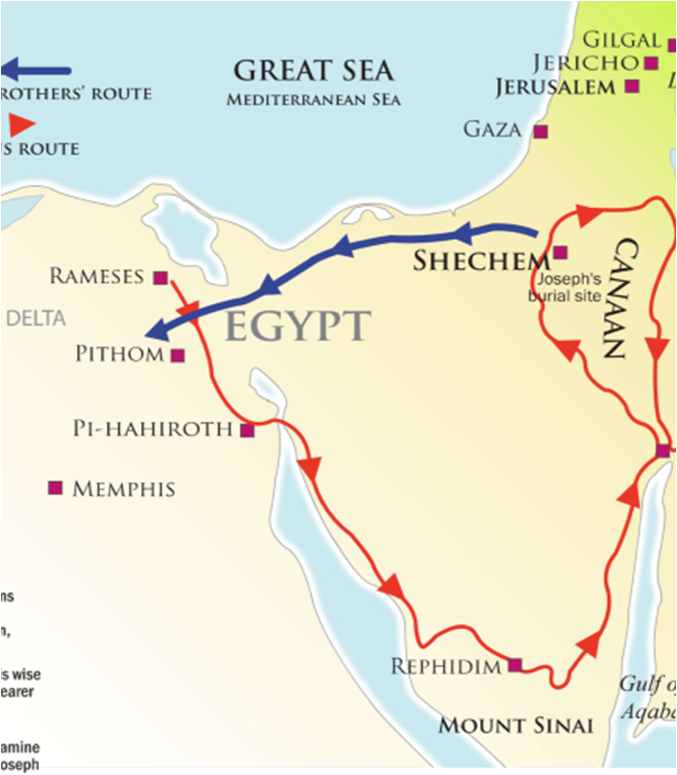
exactly as He wanted to. Pharaoh responded just as God intended, according to verses 5-9. And then we see the personal interaction between Israel and the God of their fathers.
v10: First, they saw, then they feared, and finally they cried out to the Lord. Pharaoh’s chariots were advancing. The dust cloud was on the horizon, and the situation from a human perspective was hopeless. After all, their position had them pinned between the advancing army and the sea.
vv11-12: Their fear produced a vitriolic bitterness known only to the desperate and hopeless. What a wretched shame that they not only thought what we find in these verses but said the words out loud. Moses was obeying God, step-by-step. Yet the children of Israel accused him of leading them out to die in the wilderness. Comparing v11 with v10, I think we can see their impatience ultimately with God. They cried out to Him in v10, but the chariots kept coming. That’s an important observation: God wanted the chariots to come because He was orchestrating a great deliverance. The Israelites had no idea about this greater scheme. They were key players in the grand drama, but their objective in the battle was just to trust in the God Who had taken them this far. They failed miserably, but God was faithful, and His fight was with Pharaoh.
The Command
“But Moses said to the people, “Do not fear! Stand by and see the salvation of the Lord which He will accomplish for you today; for the Egyptians whom you have seen today, you will never see them again forever. “The Lord will fight for you while you keep silent.” ” (Exodus 14:13–14, NAS)
The word translated “Stand by” in the New American Standard Bible has been usually translated “Stand still” in the older conservative versions, like the KJV, NKJV, and Darby. That is the correct translation if you understand KJV English. Back then “stand still” might well mean “stand firm,” including the notion of courage. This is why some modern translations have gone with this beefier idea (NET, ESV, NRSV, RSV, NIV). For once I agree with the ESB/NRSV (British revision tradition) over the NASB (American revision tradition). The word in Hebrew is YATSAB (יָצַב), which means in this conjugation (hitpael stem) to station oneself firmly.
In verse 14, the command to “Stand Firm” is part of a two-command antithesis followed by a third command. Moses actually starts with a prohibition “Fear not” and compares it with this command of entrenched courage. These two orders amount to one state of mind. If you reject inordinate fear, you need to replace it with something else. Enter the third command: “Watch.” This event was designed as quite a show for the Children of Israel, who were in desperate need of perspective.
Prohibition: “Do Not Fear”
Alternative to fear: “Stand firm”
From that Position of Strength: “Watch the salvation of the Lord which He will accomplish for you today.”
T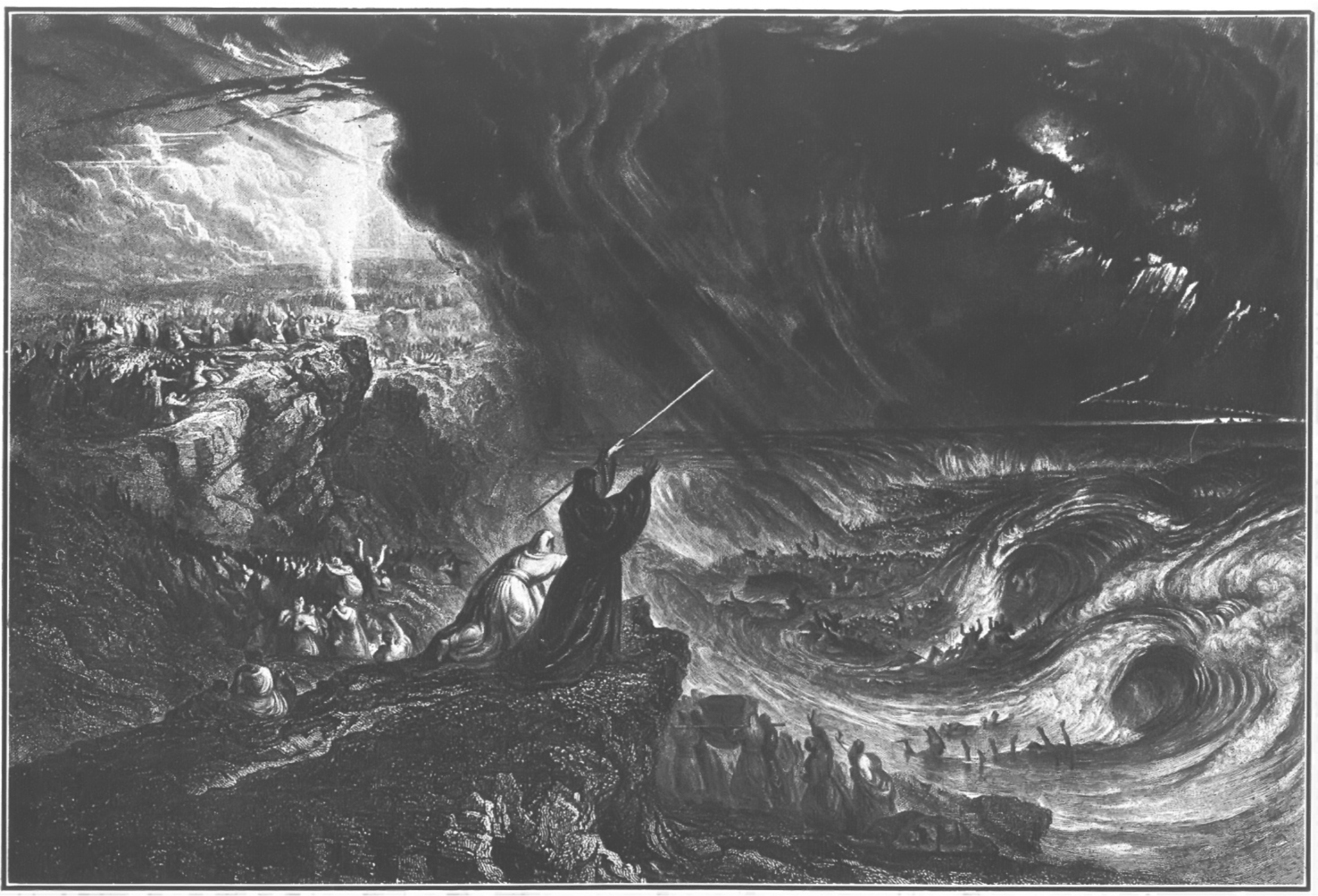 his command is then followed by two promises: 1) they will never see these Egyptians again and 2) the Lord will fight for them. In v14, there is an interesting conclusion to the second promise: “while you keep silent” is better rendered, “and you will keep silent.” A fitting rebuke for their faithless bellyaching!
Three Thoughts:
1. Sanctification: Do not fear (John 14:27, Rom 8:15, Is 41:10), stand firm (Gal 5:1, Eph 6:11, 13), and watch God work. You never outgrow the need for moment-by-moment faith in God. Enjoy the show!
2. Theology Proper: It is very often God’s preference to keep us unaware of many of the things He’s working in and around us. This concealment is part of His broader objective that you focus on Him, rather than your circumstances. The Exodus story in Chapter 14 shows us that in our limited perspective we have no clue how God is using especially our most hopeless circumstances to bring many to Himself. Embrace your role in the great drama!
3. Anthropology: It is hard to see man at his ugliest, as in Exodus 14:11-12, because we see ourselves. The mirror is hard to look at when it shows our weaknesses and flaws. These people had seen the power of God in the Ten Plagues of Egypt. They had seen God take Pharaoh down a few pegs and win the battle of wills. They knew enough to know they should trust their Creator. When God works in your life for your deliverance and blessing, keep a mental record. Times will come when you will need to keep God’s past works, like the Exodus, in the forefront of your mind.
 davidroseland.com
thank u!
–read; major sarcasm here- and just in case we had any doubts science has now “confrimed” that it is possible for the Red sea to be parted………
http://www.npr.org/templates/story/story.php?storyId=130112925
J