9 November 2010: Comfort One Another

What you say when someone is hurting can mean the difference between genuine, loving help and real harm. I think of Job in this regard. He was doing well with his colossal suffering until his self-righteous friends tried to set him straight. Their “help” just amounted to distraction, and they became like a fourth wave of his testing. Three well-intentioned but ill-advised friends brought the straw that broke the camel’s back.

How can we comfort people who are suffering? We certainly have instinctive, good ideas about that. The difficulty and complexity of how to comfort others involves the differences between people—we respond differently from others in similar circumstances. That’s the nature of personality and individual personhood, a wonderful facet of God’s creation. We as individuals are unique and diverse, yet there are universals. Discomfort is less desirable than comfort. We hurt when loved ones die.

The Command

Therefore comfort one another with these words. (1 Thessalonians 4:18, NAS)

This command is the conclusion of Paul’s informative teaching about the fate of believers who have died before the Resurrection of those “in Christ.” If we look in some detail at this verse, we see a generic approach to comfort the hurting. There is power in the Word of God.

“Therefore” makes us look back at what precedes.

We could not know what Paul tells us in 1 Thessalonians 4:13-17 if he had not told us. This is the nature of direct Revelation. God uncovers or reveals something of Himself or His plan, and now we know. Paul is not conjecturing, he’s telling us how it is, and our response is either faith or not. When God gives us information, we should pay attention. This is the Bible.

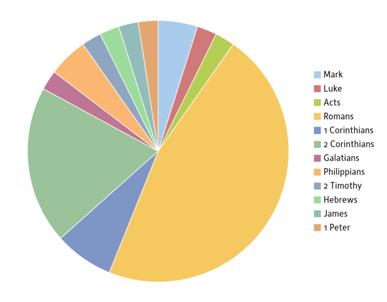
“Comfort” is the imperative of one of Paul’s favorite words. PARAKALEO, παρακαλεω means literally “call alongside” in its component parts, and the various uses are related to this etymology. If you need help, you call someone alongside. If you want to help someone, you may call them alongside. In the NAS, PARAKALEO is translated as comfort, exhort, urge, implore, and several other words that involve personal communication. Comfort looks at the word from desired results, while exhort and urge are more about the communication itself. Paul is the author exactly half of the 108 times we find this word in the NT.

“One another” means just what it says in English. This does not mean pastors to their flock, though that is included. This means that anyone in the assembly who has the information should be ready to love anyone else in the assembly who needs the information. To have this work, there has to be a sense of “one-another” within the group.

“With these words” gives us the key ingredient we should bring for those believers who need encouragement. The Word of God is the best medicine for those who need comfort, especially when their loved ones are recently “absent from the body and at home with the Lord (2 Cor 5:8).” Did you ever notice that someone speaks at a funeral? We got the idea from Paul’s command here.

Four Thoughts

  1. Nothing will help believers in their real suffering more than the Truth, the real Word of the Living God.
  2. Believers are responsible to offer each other this comfort; it is part of our duty in the Family of God.
  3. Generally speaking, comfort like this requires context; you must be in someone’s life to have the credibility and standing to offer the encouragement they need.
  4. We never need Biblical Wisdom more than when we deal with people.

Passage to Pray

Psalm 77

Memory Verse: 1 Thes 4:13-17

“But we do not want you to be uninformed, brethren, about those who are asleep, so that you will not grieve as do the rest who have no hope. For if we believe that Jesus died and rose again, even so God will bring with Him those who have fallen asleep in Jesus. For this we say to you by the word of the Lord, that we who are alive and remain until the coming of the Lord, will not precede those who have fallen asleep. For the Lord Himself will descend from heaven with a shout, with the voice of the archangel and with the trumpet of God, and the dead in Christ will rise first. Then we who are alive and remain will be caught up together with them in the clouds to meet the Lord in the air, and so we shall always be with the Lord. ” (1 Thessalonians 4:13–17, NAS)

Posted in New Testament Commands, Paul | Leave a comment

4 November 2010: Rejoice

The Command

Rejoice and be glad, for your reward in heaven is great; for in the same way they persecuted the prophets who were before you. (Matthew 5:12, NAS)

Rejoice is CHAIRO, χαιρω, a common word in the Greek NT that really expresses what we mean in English when we say “rejoice.” This word is a very common command for Paul, too in Romans 12:15, 2 Corinthians 13:11, Philippians 2:18, 3:1, 4:4, and 1 Thessalonians 5:16. We all know the common experience of rejoicing when we discover something good, when we meet our aims, when things go our way. The “Wise Men” of Matthew 2 rejoiced when they saw the Christmas star in Matthew 2:10 (the first use of CHAIRO in the NT). The shepherd of the ninety-nine and one sheep in Matthew 18 rejoices when he finds the one lost sheep. These are instances of rejoicing upon encountering a circumstance that motivates joy. Circumstantial rejoicing is something God designed us to do.

But what about the command to rejoice? This is not the same as plodding along through life and meeting a happy circumstance that inspires joy. Sure, there are surprises along the way that “make our day,” but the Christian life is not designed by God to be a mere series of reactions to the circumstances we encounter. The Christian life is a life of deliberate
joy. Jesus, the “author and finisher of our Faith” exemplified this life of joy and commands it here.

We should also avoid the alternative error. Many, rather than drifting through life with no deliberate joy, being “tossed about by waves” as “circumstantialists,” are trying to pump themselves up with an artificial joy that rings phony in our ears. This kind of bootstrap joy is akin to the person who loves hypocritically. Not having the love of Christ produced within by the Holy Spirit, the hypocrite lover pretends to love because, after all, Jesus commands it. The hypocrite jubilant is similar, and the discerning can spot the lie pretty easily.

So if we aren’t supposed to “fake” it, how can we obey the command to rejoice? Read the explanatory seven words beginning with “for” in v12: you focus on God’s revelation of your situation, not your situation itself! The answer to the hard questions is always “Go to God’s Word.” Careful, though, we go the Word not for “relevant answers” to our little questions but for life, for wisdom, for embracing our Father. And there we find better answers than our questions, answers that really satisfy.

CHAIRO can also mean “Hail,” which is the outer expression of inner joy at seeing someone you are glad to see. “Hail to the King,” a rejoicing at his presence, is how the king’s subject is supposed to feel at seeing him. Few today know about this connection between word meanings and our cultural expressions. We hear the band play “Hail to the Chief” whenever the president appears at a public gathering. We think it means honor–and it does–but the sense of honor is that we are overjoyed at his presence. The Christian life is inside-out, not like our hypocritical, shallow niceties that amount to public manners. You can say “Hail to the Chief” and be anything but rejoicing inside. Yet when we hail our King of Kings, the obvious motivation should be “joy inexpressible and full of glory.”

The Context

Perhaps there was never a more important verse to read in its context than Matthew 5:12, one of the most exciting and encouraging commands we will find in the Bible. This verse is the conclusion to the famous Matthew 5 Beatitudes, the nine beloved pronouncements of “blessed are you,” which really emphasize the resultant inner happiness of those who are blessed by God. \

To understand the full impact of v12, you have to read verse 11, for the two are a package deal. Blessed (Happy) are you when people insult you and persecute you, and falsely say all kinds of evil against you because of Me. ” (Matthew 5:11, NAS) The context for the command to rejoice is persecution for Jesus’ sake. Not just any persecution: He says, “because of Me.” Some misappropriate this encouragement for self-inflicted “persecution,” which really means painful and appropriate consequences for foolish choices. We rejoice now in view of great future reward in Heaven despite, and really because of, great suffering here and now. The reason for the suffering that draws “reward” is His marvelous Name.

The broader context of this counter-intuitive blessing package is the “Sermon on the Mount,” where Jesus teaches the first of the five major Discourses around which Matthew organized his Gospel. This teaching event called a “Sermon,” Jesus presents the truth of God’s Righteousness and explains how the Mosaic Law required that Righteousness from Israel inside-out. The heart is the target of the Lord’s teaching, and this was in direct contradiction to contemporary teachers of the Law. The historical setting is very important. The Pharisees and their associates, who were the best “students” of the Law, had actually twisted it to be a system of external behavior whereby man could act righteously and somehow please God by his fleshly energy. The teaching of the Pharisees and the teaching of Jesus were exact opposites of one-another, in other words, though they used the same Text. That opposition would take Jesus to the Cross, for which we read in Hebrews 12:2 He actually rejoiced as He taught us to do in Matthew 5:11-12!

Three Thoughts

1. Joy can and should be the deliberate experience of the believer in Jesus Christ despite horrific circumstances, including persecution of all kinds.

2. Hypocritical, artificial joy is deliberate but not genuine.

3. Jesus showed us how to have real joy despite trying circumstances: focus on what God has said in His Word, rather than what others say. Truly, if every day for you has as its primary focus your encounter with the Living God in His Word, you will be able to obey this command.

Passage to Pray

Matthew 5:1-12

Memory Verse: Matthew 5:11-12

“Blessed are you when people insult you and persecute you, and falsely say all kinds of evil against you because of Me. “Rejoice and be glad, for your reward in heaven is great; for in the same way they persecuted the prophets who were before you. ” (Matthew 5:11–12, NAS)

Posted in Jesus, New Testament Commands | 1 Comment

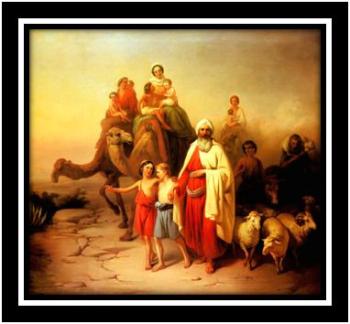
2 November 2010: Go

Sometimes our faith seems absurd in the face of the overwhelming tide of its antithesis in the world around us. But the tide is not really overwhelming, and the flood is actually God’s to command. From Genesis 12:1 to Revelation 22:21 the Bible is a story of the minority who have access to the Creator through faith in Him. Do you have it?

The Command

Now the Lord said to Abram, “Go forth from your country, And from your relatives And from your father’s house, To the land which I will show you…. ” (Genesis 12:1, NAS)

This event is a singular turning point in the Genesis narrative, where God restricts the Plan of human redemption in the Seed of the Woman (Gen 3:15) to one family out of all the families of the earth. God started with one man, Abram, and brought about the miracle of Calvary, the Resurrection, and eventually the Kingdom of David’s Greater Son. The relativists and inclusivists will hate the implication of a restricted revelation from Sovereign God, Whose view of truth is the view.

Nevertheless, this is the wonderful reality in which we live. God called Abram and made him a great nation, a blessing, and the heir to the Land.

Today’s command is one of separation, based on God’s greater plan for Abram’s life. God commanded, and Abram responded in faith. In so doing, we see that greater plan unfold in the rest of the Bible. He had not a clue what God was ultimately doing with and through him, but he responded to the command, to our eternal joy.

A Weighty Requirement

From what was he to separate? Geography is implied in the word “Go forth,” הָלַך, HALAK in the imperative. But the command is more than geography. Astronomers continue to dazzle us with their discoveries from high-tech telescopes; the galaxy is too large for us to fathom, and it is small compare to the rest of the known universe. From the galactic picture, Abram’s geographic move was pretty small. But the move meant everything.

Land

The three separations of God’s command in Genesis 12:1 are “country,” “relatives,” and “father’s house.” These three things that Abram would “lose” or give up, God promised to replace, in vv2-3. And the replacement was infinitely better than what he lost. The “country” is the basic word in Hebrew for “land,” אַרֶז, ARETZ. The parallelism is really tight between this word in the command and the corresponding promise in the second part of v1, “to the land (ARETZ) which I will show you.” The command is “Go from your land…to the land I will show you.” God’s command was not a removal but a replacement.

Relatives

The next separation, “from your relatives” is not just a function of geography. They were not welcome to come with him, as the story bears out, because this is about separation from
everything
to God. Even Lot, called righteous in Hebrews 11, was in the way of Abram’s full obedience, for the promise is not restated until after they separate in Gen 13:14. “Your relatives” is the word מוֹלֶדֶת, MOLEDET, based on the verb meaning to beget. This is a versatile word that can often mean one’s descendants–begotten ones through the generations. But it also means one’s relatives, fellow branches on the “family tree.” This would be the broader of the two statements of family separation.

Father’s House

Often in the Hebrew Bible we find a progression from least to greatest. The last separation commanded by God is the greatest, in my view. Abram was commanded to separate from his “father’s house.” This is the third use of “house,” בַּיִת, BAYIT in the Bible. The first is talking about the structure on the Ark of Genesis 6, but the second is Noah’s “household.” Noah and his three sons and all four wives amounted to Noah’s “household.” Closely related to this word is the transmission of inheritance. The sons of Noah were their father’s heirs, as their children would be. That’s us by the way. Apparently whatever Abram stood to gain from his father’s household was in direct contradiction to what God was going to do with him. Historians speculate and archaeologists argue, but Moses is pretty clear that Abram was to separate from all that his world had taught him to expect. Abram’s name would no longer be Abram, “From a High Father,” but Abraham, “Father of Many Nations.”

How important is obedience? God tells Abram to “Go,” to separate from everything familiar to him, and doing so brings about eternal life for all who believe (Jn 11:25-26). How might the outcome of Abraham’s decision to obey shock him, had he known fully what God was doing for the human race with him? How might the outcome of our decisions shock us?

Three Thoughts

1. God’s commands to separate may be restrictive, but they never restrict His blessings.

2. Abraham is used throughout the New Testament as an example of the Faith. Are you ready to follow that example? What’s holding you back from going wherever God wants you to go? From separating yourself from whatever He wants you to separate?

3. Mystery is a key component of the Biblical presentation. Abram did not know what was at stake in his obedience to God’s command, but he knew the Source of the command. That was enough for him, and by God’s design it should be enough for us.

Passage to Pray

Luke 14:26-33

Memory Verse: Genesis 12:1-3

Now the Lord said to Abram, “Go forth from your country, And from your relatives And from your father’s house, To the land which I will show you; And I will make you a great nation, And I will bless you, And make your name great; And so you shall be a blessing; And I will bless those who bless you, And the one who curses you I will curse. And in you all the families of the earth will be blessed.” ” (Genesis 12:1–3, NAS)

“The grace of the Lord Jesus be with all the saints.”–John

Posted in Uncategorized | Leave a comment

1 November 2010: Dwell On These Things

How we spend our time is closely related to what we are thinking about. Deliberate thought takes energy and effort, and it is the key to a deliberate life that accomplishes something. Entertainment media, while stimulating thought on some level, tend to direct us away from deliberate thought. But the Bible encourages us to be intentional about our attentions.

The Command

Finally, brethren, whatever is true, whatever is honorable, whatever is right, whatever is pure, whatever is lovely, whatever is of good repute, if there is any excellence and if anything worthy of praise, dwell on these things.
(Philippians 4:8, NAS)

Paul often chains similar things together in “laundry lists” like this. The favorite passage about the “Fruit of the Spirit” in Gal 5:22-23 is a list like this, and so is its complement list of “Deeds of the flesh” in 5:19-21. Here Paul very artfully lists the good, gathering all that is worthwhile into a package; then he issues the command to “dwell on these things.”

The command is LOGIZOMAI, λογιζομαι, a common word in the NT (41 occurrences) that always addresses a person’s thinking. Paul is particularly fond of this word (33 instances are his), which generally means consider or reckon. He uses it nineteen times in Romans, which is surely a book of Reckoning. Here is an interesting question: Is this word so common for Paul because he was given to reflection and thought, or is reflection and thought central to Paul’s objective subject matter? The liberal theologian will tend to favor the former, while the evangelical will recognize the latter. One results in worship; the other is manifest arrogance.

Logizomai usually deals with forensic justification in Paul’s letters. It is the word that is translated “credited” when Paul quotes Genesis 15:6 and cites Abraham’s faith as the model for justification:

For what does the Scripture say? “Abraham believed God, and it was credited to him as righteousness.” ” (Romans 4:3, NAS)

It is in Romans 4 where Paul uses logizomai this way the most, 10 times. The idea is to “reckon to someone’s account,” and has a specific accounting nuance in these uses. The modern translations of Philippians 4:8 reflect a different meaning from “reckon in an accounting sense.” Theologically, Paul uses logizomai in this sense to say that God’s righteousness has been credited to us through His work. We call this justification.

The Various Translations

NAS (1977–my favorite English Bible): “Let your mind dwell on these things”

NKJV: “meditate on these things”

Geneva (1599), KJV, Darby, ASV: “think on these things”

NET (New English Translation by DTS), ESV, NIV: “think about these things”

Tyndale (1534): “those same have ye in your mind.”

Before we get the more specific sense of crediting something to someone, we have its root idea, which is simply thinking. So we have a word in Greek that has multiple related meanings, and all the above English translations are basically saying the same thing: It is In Your Head. Logizomai is behind the English word logic, and often the mathematical nuances of logic are meant by the Greek word. Accounting involves calculation and reasoning, but this does not mean Cartesian logic per se. The idea is that in your heart you have a capacity and responsibility to think, to reason, to consider, to ponder. Thinking is a miraculous processes that takes place in that mysterious intersection between your body–the brain–and the immaterial you–the heart. Many believers fail to note this critical forefront of Christian experience, thinking, but here is the command to do so in black and white.

Using The Accounting Metaphor

While Paul does not mean accounting in his use of logizomai here, we can play with it. For you to obey the command to consider carefully, to dwell upon or ponder the good things, you first have to deposit them. If you want to process the information you must first get hold of some. Notice that Paul does not say, “reason your way to the good things that you need to discover within yourself” or some other postmodern, therapeutic drivel for navel-gazers and ne’er-do-wells. His idea in Philippians 4 is based on what has preceded in Philippians 1-3: Jesus as our wonderful Example and the race we are all to run towards His judgment at our resurrection. This is, at least, the objective content Paul would begin with to enjoin our mental exercises.

So if the Truth of the good things to which Paul refers is objective and determined outside of ourselves, then how can we consider, meditate, or let our minds dwell upon these things? Simply put, feed your heart. By the time you’ve read from Philippians 1:1-4:7, you should have some magnificent things to meditate upon!

Objections

1. It is hard to understand the Bible. Solution: Get help: pray about it expecting the Lord to help you; listen to your pastor’s teaching–he’s probably praying for you to get it and studying and teaching exactly what you need to hear, by God’s arrangement.

2. It is too much work. It shouldn’t be this hard. Solution: Confess your sin of arrogance (1 John 1:9) to God the Father and ask Him what He thinks about how much work it should be or how hard it should be. Laziness is the opposite of Christian virtue.

3. The Christian life is not about thinking something but having an emotional experience. Solution: Read the Bible, do a concordance study on the word “heart.” Actually, the Christian life is an integrated whole that addresses the whole person, beginning with what you think. Thinking on the good things should produce an emotional response, but the Christian life is never a lack of emotional control. If you find yourself out of balance, you are out of the Bible.

Three Thoughts

1. A summary description of the Christian life is the dwelling of our minds on the things of God, the truly good things.

2. You have to possess the good things in your heart if you will meditate on them there. This requires acquisition, or the intake of the Word.

3. Many who study the Bible fall short of this command because they think acquisition is the same as reflection. No, actually, you first must get it; then you think on it. Thus the (almost) daily devotions.

Passage to Pray

Psalm 19

Memory Verse:

“Finally, brethren, whatever is true, whatever is honorable, whatever is right, whatever is pure, whatever is lovely, whatever is of good repute, if there is any excellence and if anything worthy of praise, dwell on these things. ” (Philippians 4:8, NAS)

“Grace and peace to you from God our Father and the Lord Jesus Christ”–Paul

Posted in Bible Study Helps, New Testament Commands, Paul, Word Meanings (Lexicography) | 5 Comments

27 October 2010: Become

Why is the universal appeal to “change” so universal? Why are we never satisfied with the status quo?

I think the answer is Biblical. The Bible says we should expect everyone to be basically dissatisfied and uncomfortable no matter how many different options they change to. Hegel proposed this is the nature of reality, with no moral component to the constant process of equilibrium-imbalance-equilibrium ad infinitum. The Bible says that man is his own problem because of the universal proclivity to sin. So, contrary to Hegel, it is above all things a moral issue, in that the turbulence we endure of constant revolution and decay–which is never evolution and improvement–is wrong.

This is not a political discussion. People are dissatisfied in every arena of life. The phenomenon of constant change runs the gamut from politics to baseball, from boy bands to foreign wars. As soon as someone gains notoriety, they become notorious almost overnight. In some instances the public figure brings his shame on himself. Perhaps most instances. Still in others, the masses tear him down. Why the universal upheaval? Sin.

I think of it like a man with a pinched nerve in his back. He has to keep moving and repositioning in his recliner to try to find some relief, but there is no relief. Only movement keeps him from thinking about the aggravation. So we watch as history ebbs and flows, and like the suffering man, CHANGE is all we have to HOPE for.

I propose a more truly hopeful mantra than change. Why not IMPROVE?

The Command

I beg of you, brethren, become as I am, for I also have become as you are.” (Galatians 4:12a, NAS)

This is one of the most difficult places to translate the NT into English because so much is going on in the Greek. That is not a complaint but fair warning that this verse requires some detailed attention.

First, we should probably put the verse in Paul’s order so we can understand Paul’s flow of thought a little more clearly:

Interlinear

Γίνεσθε ὡς ἐγώ, ὅτι κἀγὼ ὡς ὑμεῖς, ἀδελφοί, δέομαι ὑμῶν.

Become like me, because I also like you, brethren, I am asking you.

Translation:

Become like me because I also became like you. Brethren, I am pleading with you.

The command is that the Galatians become like Paul, oriented on Jesus Christ, not the false teachings of legalists. Paul understands the newness of life in Christ, the Savior Who fulfilled the Mosaic Law. The point of Galatians is that the coming of Christ changed things, and to go backward as though He has not come is to deny Him. Paul, a Jew under the Law in his former manner of life, has become like them, free with respect to various strictures that have been fulfilled in Christ. Now, they need to become as he is, bound to Christ and so free from those same strictures.

The Galatian error is one of misreading history and the impact of the Cross of Christ. If you go back to the lifestyle of expectation rather than your inheritance that embraces the present realization, you’re a “Galatian.” “I fear for you,” says Paul. We should all become like Paul.

The word become is GINOMAI (γινομαι), a very common Greek word in the NT that usually has something to do with existence or state of being. In English we would probably call it a linking verb. In Greek, though, there are two ways to say “to be,” and this one often means to “come to be,” the change of state from one mode of existence to another. The Galatians are not like Paul, he is commanding them in the present imperative to make the change. This is not arrogant; Paul, like Jesus is saying, “Follow me.”

Elsewhere Paul makes this chief issue of human leadership apparent in his ministry: 1 Cor 4:16 and 11:1 make the issue explicit. Imitation of Paul is imitation of Christ. Friends, this is not just change, this is real improvement.

Finally, it is important to note how Paul issues this command. The imperative that begins the sentence is qualified by the request that ends it. That does not mean Paul is any less adamant or that we are any less bound to obey the command. But Paul is making a personal appeal because he is personally invested. This is the model of NT leadership in the Body of Christ: We offer a personal appeal to others that they embrace uncompromising truth. The Christian way is not coercion but loving, personal appeal.

Three Thoughts

1. By God’s Design, true human leadership involves the leader setting the standard and the followers imitating the leader. This, by the way, is the universal human approach to leadership. Like it or not, even “nonconformists” or “individualists” imitate. A case in point would be the highly individualistic tattoo fad so popular today. An individualistic fad results in exactly what you would expect: uniformity! Whom are you imitating?

2. Change is inevitable. Maybe politicians should run on a similar platform of earth rotation. I’m for it, aren’t you! Go Rotation of the Earth!! Life marches on, and everyone changes all the time. The question is: are you improving? If you are imitating Christ after Paul’s example, the answer is yes.

3. The most important way you can imitate Paul is to place God’s Word as the focus of your life and the ground of your thinking. The key to transformation is the work of God’s Spirit on your spirit through His Word.

Passage to Pray

Isaiah 6

Memory Verse

1 Cor 11:1


Posted in New Testament Commands, Paul | 2 Comments

26 October 2010: Do Not Be Afraid

When I was in middle school I received my first well-stated challenge to the Bible’s authority. It was not from a teacher or even an adult but a well-taught (in error) classmate. That was of course the first challenge of many. If you have spent any time thinking through the Word of God as a believer and interacting with the world on its contents you have come across the challenges in many different forms, from all quarters. Sometimes the challenge is from someone you love; sometimes you receive the attack from a personal enemy. It is rarely easy to handle, unless you have your prior commitments well-established and are ready to examine theirs. So it is, and so it has always been, back with our common ancestor Eve (Ishshah) in her infamous exchange with the Satan-possessed serpent (Gen 3:1-6).

I once heard a man say, “I don’t believe the Bible because no one is perfectly infallible so that he knows perfectly everything he writes about, especially stuff he didn’t see himself….” This is one pretty common challenge to Moses’ Torah, the Law. Such a challenge is really ignorant of the position Bible believers actually hold: Genesis-Deuteronomy, all written by Moses 3500 years ago are not only from Moses; they are God’s work through Moses, according to 2 Peter 1:21. God knows everything perfectly, and He alone is capable of insuring our works are consistent with His reality.

So I defend Moses with Peter, at least for my own satisfaction. Scoffers will scoff regardless.

The challenge I got in middle school, though, was more difficult. My friend stated with conviction and vigor that the Bible contradicts itself. Today I want to explore the supposed contradiction my classmate suggested–in the passage he quoted–and illustrate the difference between scoffing and reasoning.

The Command

Moses said to the people, “Do not be afraid; for God has come in order to test you, and in order that the fear of Him may remain with you, so that you may not sin.” ” (Exodus 20:20, NAS)

Do you notice the “contradiction”? Moses says “do not be afraid” as the initial instruction, but then he explains the purpose of the presentation on Mount Sinai that has the nation cowering in despair: the point is that they fear the Lord. “Do not fear…but you should fear.” Is this not a contradiction?

In a devotion that focuses on the commands of Scripture, we ought to notice the context: this is the part of the Bible where God gave the Ten Commandments to Israel, as discussed a bit in yesterday’s entry. This was a truly awesome scene, with smoke, thunder, lightening, and even “trumpet” sound all as accompaniment to God’s voice, as He delivered those great imperatives. Those “Ten Commandments” which founded their state and which undergird our civilization. After God spoke the “Ten Words” (Dabar = “word”) in vv3-17, the people asked Moses to be their mediator in v19, “or we will die.” Verse 20 is Moses’ response, which commands them not to be afraid.

“Maybe the resolution is in Hebrew” some who know a bit about the Bible will suggest. Friends, the answer is not in Hebrew any more than in English. Let me show you why:

Moses said to the people, “Do not be afraid; for God has come in order to test you, and in order that the fear of Him may remain with you, so that you may not sin.”

At least in the New American Standard we have a different word used for both instances of “fear.” “Be afraid” is not the same English word as “fear.” They have much the same meaning and even share their origin, but the words are actually different. Not so much the case in Hebrew!

וַיֹּ֨אמֶר מֹשֶׁ֣ה אֶל־הָעָם֮ אַל־תִּירָאוּ֒ כִּ֗י לְבַֽעֲבוּר֙ נַסּ֣וֹת אֶתְכֶ֔ם בָּ֖א הָאֱלֹהִ֑ים וּבַעֲב֗וּר תִּהְיֶ֧ה יִרְאָת֛וֹ עַל־פְּנֵיכֶ֖ם לְבִלְתִּ֥י תֶחֱטָֽאוּ׃

If you just keep your eyes on the red letters in the above passage from the Masoretic Text, you will see the same root letters, Y-R-A. The first instance is the verbal command, “do not fear.” The second is the related noun, and the clause is literally, “And in order that it would be, the fear of Him, upon your (plural) faces, so that you would not sin.”

“Do not be afraid….but have the fear of Him on your faces” does not really settle the perceived contradiction. Are we supposed to fear or aren’t we?

No Contradiction

The problem is not really a problem for them that have “eyes to see.” We are dealing with two very different but related notions that the word ירא can be used to communicate. In other words there are two kinds of fear in v20, and one is prohibited! We might at this point think of taking our eyes off the Bible in order to figure out what the two categories of fear are, but that would only take us into speculation and subjectivity. The context and how Moses uses the words are our guides to what he means by the two uses of the same word. It has been well said that “words have meaning.” This is true, but only and specifically the meaning supplied to them by their author. In other words, we do not really use language by the “rules” of the dictionary; the dictionary is trying to describe the rules of the language as we use it.

The Language Lab: Stability and Ambiguity

Classic, pre-modern Biblical interpretation (hermeneutics) has always assumed that meaning is connected to the author’s intent rather than the reader’s response. Here is a great example of what we mean. There are several senses in which you could use the English word fear, and most would agree that some are healthy and some unhealthy. But when you use the word in a sentence communicating your thought, you have the sense in mind that you wish to convey with the word. This possibility of multiple meanings for the same words is what I’ll call ambiguity. Now there is a stability here that is just as important to recognize as the potential ambiguity. The stability is that within the language community, words tend to have an accepted range of possible meanings, and using them outside that range does not communicate anything.

“Bunny my bunny gilligans!” does not mean anything to the broad English speaking community. However, if I invented new meanings for bunny and gilligan and established a community that embraced those new meanings, then my sentence would communicate what I had intended. But only to the special community that knew the meanings! Let’s say I made up the following lexicon of words I coined: Bunny
used as a verb can mean either “to polish” or “hang wallpaper.” How is that for arbitrary and absurd?! As an adjective bunny means “new.” Gilligans means “a pair of shoes” or as slang “bare feet.”
Now my crazy sentence means something I intended to communicate but only in the limited community that knows my word meanings. “Polish my new shoes!” in English is “Bunny my bunny gilligans” in Crazese. This is how language works, and God invented it. By the way, this is what mathematics really is. Math is a language that expresses in shorthand statements about quantities.

Lewis Carroll was ingenious at illustrating these kinds of things. So much literary humor is bound up in the continuum between latent ambiguity and stable range of meanings. Moses is not intending humor in Exodus 20:20, but he does use one word with two different meanings in the same sentence. The contradiction is only apparent to those who are looking for one, not for those who are looking for Moses’ meaning.

What Moses means by Fear

Moses said to the people, “Do not be afraid; for God has come in order to test you, and in order that the fear of Him may remain with you, so that you may not sin.”

On the one hand, seeing the awesome power of God is cause for a healthy recognition that God is God and we are not. This is the “fear of the Lord” that both OT and NT writers assume as foundational to a person’s walk that pleases God. Standing in awe of God’s omnipotence is not the same as cowering in terror. Kneeling in reverence for your Creator is not the same as fallen Adam hiding from Him in the Garden “because I was afraid.”

If we could see infinite creative and destructive power like the children of Israel saw at Mount Sinai, we might be tempted to fear for our lives too, to be afraid of God. But Israel had already seen the Mighty Arm of the Lord deliver them from cruel Egypt, and this wonderful salvation was right before the Sinai experience. The “test” of v20 was God’s challenge to their thinking: Am I good? Am I loving? Am I consistent with My Word? They could see and hear that He is Omnipotent; the earth was quaking under their feet. Could they remember that He is good? The answer to that question is the difference between one kind of fear: I’m in terror that cripples me and destroys my soul and the other kind of fear: I am in awe of my wonderful Creator, Savior, and Judge.

If Israel should ever entertain the idea for a moment that God is not God, the awesome power they all saw at Sinai should have reminded them instantly not to mess with the Holy One of Israel. As the story of the Bible with its depiction of the state of theocratic Israel unfolds we see quickly that the memory of God’s awesome power faded until they were not motivated by God’s character at all. May it not be so with you.

Three Thoughts

1. God is Omnipotent, meaning He has infinite power. If that were all we knew of God we might have cause to be afraid, to hide in terror of Someone capable of doing anything He wants.

2. God is Love, Righteousness, and Goodness too. If He were only a “perfectly good guy” and not also infinitely capable (omnipotent) to bring about eternal good and righteousness, we would have reason to be afraid of evil, thinking He could do nothing to stop it.

3. The whole package is the truth; error will enter if we only accept parts of it. Taking what God has presented of Himself as a whole, simple presentation, our only appropriate response is the fear of the Lord, a recognition that He alone is awesome indeed.

Passage to Pray

Exodus 20

Memory Verse: Exodus 20:20

Moses said to the people, “Do not be afraid; for God has come in order to test you, and in order that the fear of Him may remain with you, so that you may not sin.” (Exodus 20:20, NAS)


Posted in Apologetics, Bible Study Helps, Hermeneutics, Old Testament Commands, TORAH, Word Meanings (Lexicography) | 1 Comment

25 October 2010: Love the Lord Your God

We have looked at the famous “Shema,” Deuteronomy 6:4, where we find the command to “listen up.” This favorite portion of Scripture really bears repeating. After all, and the passage itself is a repetition. Deuteronomy is a “second law” or the summary second statement of God’s commands for national Israel. If you read on in the passage, you find that everywhere your eyes are to turn you should be reminded of the Word of God. Repetition, repetition, repetition. We learn by immersion into a matter; God’s way of immersion into His thinking is repetition.

Well, the next verse, Deuteronomy 6:5, provides the “so what” of the command to listen and acknowledge God in verse 4.

The Command

You shall love the Lord your God with all your heart and with all your soul and with all your might. ” (Deuteronomy 6:5, NAS)

This is a so-called “perfect consecutive” command, which means it carries the same imperative force as the command in verse 4, “Listen.” The verb for “love” in Hebrew is אָהַב (ΑHAΒ), which looks familiar in English transliteration (a way to write the foreign letters so we can sound them out in English). We know this word elsewhere in the Old Testament: King Ahab?! Very quickly, no, this is not the basis in Hebrew for Ahab’s name. That would be a great irony, and it might make for a nice sermon! But let’s put that one to bed: Love = אהב, while Ahab = אַחְאָ֥ב. These are totally different words. Incidentally, Ahab does have a determinate meaning in Biblical Hebrew. It is the combination of “ACH” brother and
“AB,” father. Brother-Father? What does that mean? Don’t get carried away, the idea is not at all sordid! It means “he could be his father’s brother” or we might say “like-father-like-son.” Whether in exasperation or admiration, a little boy’s mother often might say, “You are just like your father.” Names can be fun in Hebrew.

Well, so much for what “love” is not. It is not
King Ahab. But the verb “AHAB,” to love, is a very common word we find in Biblical Hebrew, occurring somewhere between 217-220 times in the Old Testament, depending on how you count. Logos 4 and Bibleworks 8 software suites returned those results respectively.

Love can be a very complicated matter, but today let’s keep it simple: It is commanded, so what are we waiting for?

A Distinctive of Theocratic National Israel

We should keep in mind where we are in the Bible. Deuteronomy is Moses’ last word to Israel before they enter the Promised Land, without him by the way. “Speak to the Rock” will be a command to explore in the future. Nevertheless, the first word of Law for Israel is recorded in Exodus 20, where God Almighty spoke the “Ten Commandments” at Sinai and the people were frightened of His display of power.

All the people perceived the thunder and the lightning flashes and the sound of the trumpet and the mountain smoking; and when the people saw it, they trembled and stood at a distance. Then they said to Moses, “Speak to us yourself and we will listen; but let not God speak to us, or we will die.” Moses said to the people, “Do not be afraid; for God has come in order to test you, and in order that the fear of Him may remain with you, so that you may not sin.” (Exodus 20:18–20, NAS)

How they missed the point in succeeding generations is a great mystery of our inherent problem with sin. In any case, notice the nature of Israel’s national “constitution.” This is the legislative function of the nation which God was about to set up in Canaan. God, the Lawgiver, was giving them the perfect law for His theocratic state, Israel. The reason for pointing this out is simple: God commanded their love as foundational to their function as a nation.

So we find in the Bible that not only is love something that can be commanded, but the proper function of God’s law is to command man’s love for Himself. Can you imagine the U.S. Congress passing a bill, signed by the President of the United States commanding love for anyone? It is an absurdity to suggest that secular government command men’s hearts and minds in such a way. They have no jurisdiction over our hearts. Yet when God set up a theocratic state He commanded love for Himself, the Sovereign of their nation-state.

By the way, this command is repeated–as in quotedin the New Testament three times: Matthew 22:37, Mark 12:30, and Luke 10:27.  Jesus said this was the “great commandment” in Matthew 22:38, and it remains foundational to the lives of those who know the Father through His Son.

Three Thoughts

1. Man cannot command the heart-response of love, but God can and does command it.

2. If the Loving and Living God can command it, you can obey it. This is the ultimate purpose for which He designed you.

3. The difference between a believer loving God and not loving God is the decision to obey the command.

Passage to Pray

Exodus 20

Memory Verse: Deuteronomy 6:4-8

“Hear, O Israel! The Lord is our God, the Lord is one! “You shall love the Lord your God with all your heart and with all your soul and with all your might. “These words, which I am commanding you today, shall be on your heart. “You shall teach them diligently to your sons and shall talk of them when you sit in your house and when you walk by the way and when you lie down and when you rise up. “You shall bind them as a sign on your hand and they shall be as frontals on your forehead. ” (Deuteronomy 6:4–8, NAS)

Posted in Old Testament Commands, TORAH | 2 Comments

22 October 2010: The First Command

Here is an interesting idea: what is the first command God gave mankind?  Better yet, what is the first command in the Bible? If you go specifically by imperative mood (morphologically-indicated) you have the first instance in Genesis 1:22. This is the first imperative recorded in Scripture, but it is not to humans. Humans are given the same instructions in Genesis 1:28, with something extra not given the animals.

A Little Devotional Grammar

If you read Genesis 1 prior to the first imperative, however, you will notice that God is issuing verbal commands from the start. The difference is grammar (jussives vs. imperatives), and that difference is not one of force or intention but the object being commanded. Jussives are third person, while imperatives are second person. When He commands that light exist (v3), the report is in the jussive mood. When He commands the animals to populate the planet, imperatives are in order. So what? Well, both ways of writing are expressing the will of the speaker.

That is the heart of a command: it tells you not necessarily what will happen but what the speaker wants to happen. My little two-year-old son likes to issue commands–to his playmates, to us, even to inanimate objects. He has yet to see things go his way, especially when he commands his parents. But he is expressing his will, his preference, and it gets pretty comical. He gets frustrated about the inanimate objects sometimes.

The point of the absurd illustration of a child issuing imperatives to inanimate objects and his parents is to make the ultimate distinction. God, when He expresses His will, can get what He wants every time. “Lights on.” The first revelation we have of our God, Genesis 1, is that He is the Creator. And that statement has profound content: The Creator’s power is awesome, and everything He does is good. The Lord’s disciples marveled at the power of Jesus’ word, that he could command the raging sea to be still (Matthew 8:27, Mark 4:41). They were face-to-face with their Creator in the flesh.

The Command

God blessed them; and God said to them, “Be fruitful and multiply, and fill the earth, and subdue it; and rule over the fish of the sea and over the birds of the sky and over every living thing that moves on the earth.”  (Genesis 1:28, NAS)

In Hebrew, we find five commands in this one verse:

1.    be fruitful: פְּר֥וּ (PARAH)

2.     multiply: וּרְב֛וּ (RABAH)

3.    fill the earth: וּמִלְא֥וּ אֶת־הָאָ֖רֶץ (MAL-EY HA ARETZ)

4.    subdue it: וְכִבְשֻׁ֑הָ (CABASH!)

5.    rule: וּרְד֞וּ (RADAH)

Verse 28 is complicated (5 imperatives), and the two major things being commanded are often divided, depending on the reader’s preferences, theological bent, sociological axe-to-grind, etc. I propose holding verse 28 as a unity, a complex of blessing and commands that are all part of the same package. One blessing, two basic commands, all interrelated.

First “Be fruitful” is agricultural, as the English word suggests to us, and it means to reproduce yourself abundantly, like fruit trees with their hundreds of seed-bearing fruits every season. “Multiply” adds another level of intensity in the same direction. “Fill the earth” gives you the goal towards which this command complex is moving. This command, the first, stands in stark contrast to the so-called “Green Movement,” which, with its neo-eugenicist bias would rather see less than more human beings on the planet. Don’t believe the talking heads who claim to have counted all the beans and found the earth wanting of resources for human populations. God told us to fill the earth.

The second command complex has been called the “Dominion Mandate,” where God delegated the rule of Planet Earth to man. I believe that vv26-27 is most clearly explained by this delegation in v28 to “subdue and rule.” That is, our being God’s image is about our function as His delegated rulers, with form (our design as material/immaterial/higher-functioning beings) following function. There can be no higher earthly creation than God’s Image.

A Vital Correlation

Those who get excited about having babies but fail to recognize the dominion mandate are missing the point. Those who get the dominion part but fail to see God’s reproductive mechanism for doing it are also missing something in the context. We were told to fill the earth so that we could rule it. Now, after the Fall, we have an earth under the curse of sin being filled by sinful, fallen humans who bear the broken image of God (Romans 8:18-21).

God has been working through this broken picture of human history since the Fall to effect that for which He designed the human race and the earth. This is the Bible’s presentation of human history, and in Christ the Last Adam, the King of Kings, we will one day see earth finally and perfectly subdued and ruled in submission to our kind and loving Creator.

If Jesus and His Kingdom is God’s eternal answer to Adam’s Fall and “Paradise Lost,” then what are we now to think of the mandates to Fill and Subdue? The obvious answer is about Eternity and the impact of our choices here and now on the eternal state. We will not procreate in the age to come (Lk 20:34-36). Yet the Church will rule with Christ in His Kingdom (Rev 20:6). We are begetting and training children ultimately to participate in this Eternal dominion “to the glory of the Father.”

Notice that this understanding of human history and our role in it does not spiritualize the Text so that our choices here and now are somehow disconnected from the Kingdom. All the contingency, all the conditions placed on believers, all the warnings for believers we find in the New Testament (like Romans 8:17) are anticipating this dominion for which we were created. How you “subdue” here and now has a great impact on your standing to do so then. The children God gives us so that we will train them to know and fear Him have an eternal destiny, partaking in the Kingdom.

Filling and Subduing Applied

It should be no surprise to us that God has a pattern for how we should conduct ourselves: filling the earth through procreation and subduing it. When we see a breakdown in this pattern, we can rejoice at least that the Word has been vindicated. Bad things happen when you disregard the “Good Book.” In Europe, which is largely post-Christian today, we see a major transformation of the cultural and religious landscape. In less than a generation, several key European countries will be Muslim.

How can the West cease to be the West? People tend first to give up on the Bible, and then their lifestyle follows suit. So having children is not as important in European civilization as living the socialistic good life. Consequence: Western Civilization is about to be banished from Europe not through military conquest but through active procreation by anti-Westerners. In short, Muslims are out-reproducing the West. How did this happen? It was a subtle shifting in priorities from God’s interests to man’s by those who had the answers and forsook them.

God help the United States! We’re not far behind, in terms of birthrate. For a succinct explanation of this trend in the West, I recommend Herb Meyer’s short documentary The Siege of Western Civilization.

Four Thoughts

1. Bibliology (The Bible): The first instance of something in the Bible is foundational to our understanding of that thing in the rest of the Bible. Man’s charter responsibility is world dominion, which requires procreation, in submission to our Creator. This is man’s destiny, by Divine fiat.

2. Theology Proper:  The first command from God to man begins with a blessing.  His commands are always for our best.

3. Theology Proper: The difference between man and God is easy to see, if you look to the Text. He commands existence out of nonexistence. We do not. He knows all the knowable. We do not. He has always existed and will always exist. Not so mankind, though all people will perpetually exist.  He is not only good, He is the Source of all that his good. We are not.

4. Eschatology (Last Things): Our life is not about the present as much as the future. You have to live and function in the present, but keep your eye on the goal towards which God is taking all of history. Our priorities are never more in-tune with God’s priorities than when we live here and now in the biblical light of eternity.

Passage to Pray

Genesis 1

Memory Verse: Genesis 1:26-28

Then God said, “Let Us make man in Our image, according to Our likeness; and let them rule over the fish of the sea and over the birds of the sky and over the cattle and over all the earth, and over every creeping thing that creeps on the earth.” God created man in His own image, in the image of God He created him; male and female He created them. God blessed them; and God said to them, “Be fruitful and multiply, and fill the earth, and subdue it; and rule over the fish of the sea and over the birds of the sky and over every living thing that moves on the earth.” (Genesis 1:26–28, NAS)

Post Script

If you would like a resource on the Biblical view of the “Green Movement,” you might check out the Cornwall Alliance’s recent production Resisting the Green Dragon.

Posted in Bible Study Helps, Grammar, Old Testament Commands, TORAH | 1 Comment

20 OCT 2010: DRAW NEAR

Today’s devotion is an application of the command in James 4:8a: “Draw Near to God and He will draw near to you….”  The rest of the verse says we have to be clean to do so: “Cleanse your hands you sinners, and purify your hearts, you double-minded.”  James is speaking to believers, who like David, need their hearts to be united (not double) in the fear of the Lord.  Spend some time taking in the difference between us and God, our Creator in Psalm 86.

Psalm 86 (NASB95)

A Psalm of Supplication and Trust.

A Prayer of David.

1 Incline Your ear, O Lord, and answer me;

For I am afflicted and needy.

2 Preserve my soul, for I am a godly man;

O You my God, save Your servant who trusts in You.

3 Be gracious to me, O Lord,

For to You I cry all day long.

4 Make glad the soul of Your servant,

For to You, O Lord, I lift up my soul.

5 For You, Lord, are good, and ready to forgive,

And abundant in lovingkindness to all who call upon You.

6 Give ear, O Lord, to my prayer;

And give heed to the voice of my supplications!

7 In the day of my trouble I shall call upon You,

For You will answer me.

8 There is no one like You among the gods, O Lord,

Nor are there any works like Yours.

9 All nations whom You have made shall come and worship before You, O Lord,

And they shall glorify Your name.

10 For You are great and do wondrous deeds;

You alone are God.

11 Teach me Your way, O Lord;

I will walk in Your truth;

Unite my heart to fear Your name.

12 I will give thanks to You, O Lord my God, with all my heart,

And will glorify Your name forever.

13 For Your lovingkindness toward me is great,

And You have delivered my soul from the depths of Sheol.

14 O God, arrogant men have risen up against me,

And a band of violent men have sought my life,

And they have not set You before them.

15 But You, O Lord, are a God merciful and gracious,

Slow to anger and abundant in lovingkindness and truth.

16 Turn to me, and be gracious to me;

Oh grant Your strength to Your servant,

And save the son of Your handmaid.

17 Show me a sign for good,

That those who hate me may see it and be ashamed,

Because You, O Lord, have helped me and comforted me.


May God richly bless you as you seek, in His power, to fulfill the purpose for which you exist: “To glorify God and enjoy Him forever.”

Posted in James, New Testament Commands | 1 Comment

19 October 2010: Be Strong

Times are TOUGH. We’ve seen before (1 Pet 4:12) that we shouldn’t be surprised by the “fiery trial” that is guaranteed to beset those who are getting it right. This challenge will not go away. The title of this devotion is a popular motto, and it resonates with most human beings for a multitude of reasons. I suspect this is because things get rough. The universal human experience this side of Genesis 3 involves suffering the consequences of sin and death. People do not really like to discuss death, but facts are facts; we are going to face it sooner or later. Maybe we should think it through before we need to! “Be strong” is a popular sentiment because we need it.

The Command

Finally, be strong in the Lord and in the strength of His might. ” (Ephesians 6:10, NAS)

This is one of my favorite phenomena in the NT: A passive imperative. How can you obey a command whose action you do not perform? Greek grammar makes me ask such a question here, as in Ephesians 5:18. A word on the passive voice is in order. Think of a passive statement in English: “The ball was hit by the player for the Texas Rangers.” The SUBJECT of the verb was hit is ball. The ball is passively being acted upon “by the Texas Rangers player.” In other words: the subject of a passive verb is not performing the action of the verb. Some Greek grammarians have suggested that this is a way of saying “be strong” in a self-starting way instead of “be strengthened” in a passive way from outside activity of another. The difference is nuanced, perhaps, but I suspect the heart of the matter is that we are being held responsible for something which we do not do ourselves. The context bears out this interpretation, and NET and HCSB translate accordingly.

If you read on, say, down to v12, the nature of the need gets pretty scary. The enemy is invisible, powerful, and pervasive. In its context Paul’s command is motivated by the reality of an invisible war that rages around us. Even though we cannot see it, it is real. Our need for strength is very real. If you face a relaxing day of sitting around checking email and eating peanut butter sandwiches with no driving responsibilities or pressures, your need for strength is negligible. But if you’re facing the onslaught of the demonic horde with reason, knowledge, and power that far outstrips your own, you have incredible need for strength. That is why the strength of the Lord Jesus Christ is your Source.

In the Lord

This phrase likely means “by the Lord” here and so refers to the source of the believer’s strength in the face of his mighty enemies. Remember Ps 23:5: the enemy gets to be present while God wines and dines us. This proviso is where the biblical worldview departs from the yellow bracelet, in my understanding. Here we are not being strong in ourselves but in God. This is not greater independence and self-assertion but a profound dependence that exalts and honors your Creator. Here again is why we’re here. We read in the Bible that evil is bounded. There was a beginning to evil, and God did not cause it. There will be an end to evil, whereby God will put it away forever. In the meantime we deal in God’s power with evil, but not in fear. We handle troubles far and away beyond our capacity even to comprehend them by relying on the God Who made us, saved us, and will raise us.

Two Emphases

“In the Lord” is a reference to personal God. Paul most often uses “Lord” to refer to Jesus Christ, the Second Person of the Trinity. The emphasis of our source of strength for the ongoing struggle is the Lord, a PERSONAL source. The Bible is forever calling us to a closer personal walk with God on His terms. The second emphasis is a description of the first: “the strength of His might.” That is a reference to our personal God’s attribute of omnipotence. Our God is not only PERSONAL, He is POWERFUL. The phrase “strength of His might” should be understood as “His mighty strength.” He has strength or power, yes, but of what quality? What kind of power? Mighty power. In fact, our God is so powerful He made everything that exists out of nothing.

Now That’s a Good Source

We should derive our power from the ultimate Source, the Living God Whose power will never be exhausted or beaten. If God is your strength—as opposed to yourself or some other, lesser source—you are invincible, and your success is inevitable. This power is not so that you can sell stuff. It is not self-help so that you can be the best you. This is not one of many options for capability to go on about your ambitious agenda. The power of the Lord comes from abiding in Him (John 15:1-5). He is the vine, His Father is the Vinedresser. You are a branch upon which God can bring forth fruit if only you will abide.

Three Thoughts

  1. Sanctification: If it can be commanded, then it can be obeyed. Therefore you can be strong in the Lord.
  2. The CONFLICT: This strength is for a purpose: we are in a real war with real enemies that we cannot see.
  3. Theology Proper: There is NO GREATER POWER in the universe than the Omnipotent Creator. Your access to the needed assets He wants to supply you depends on your personal reliance on Him. The alternative sources of power—self or others—are not going to defeat the enemy we face.

Passage to Pray

Ps 100

Memory Verse

Eph 6:10: “Finally, be strengthened in the Lord and in His mighty power.”

Posted in New Testament Commands, Paul | 1 Comment